

That dream blazer feels impossible to find. Generic advice fails you every time. This guide changes everything. We teach you how to pick the perfect blazer with confidence. You will learn a tailor’s secrets for flawless fit. Transform your shopping experience starting today.
Standard body shape charts are deeply flawed. They ignore your unique proportions. Shoulder width, torso length, and posture matter more. The goal is not to hide your body. It is to celebrate it with impeccable fit. You need a strategy, not just a style tip.
Why You Struggle to Pick the Perfect Blazer
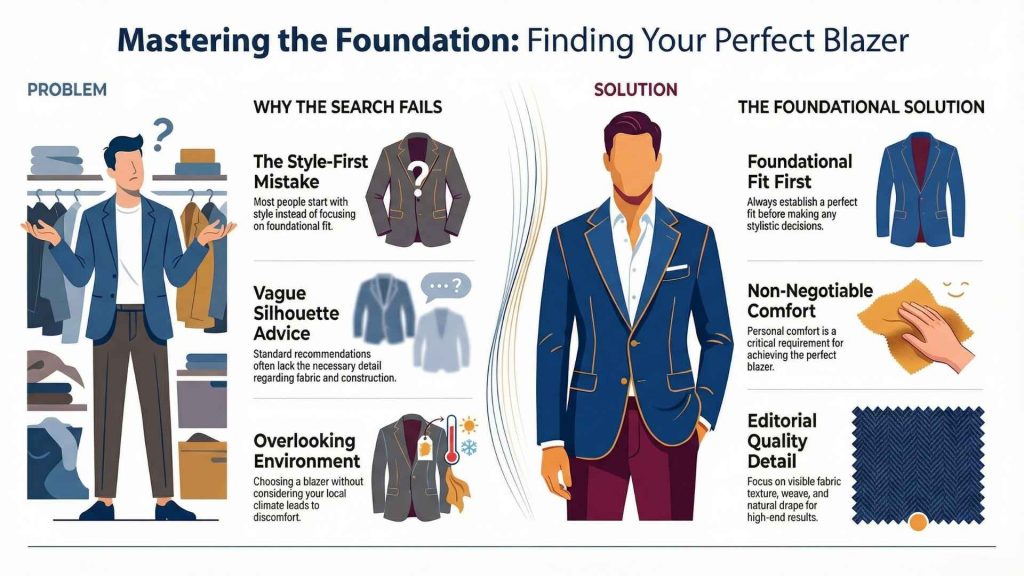
Most advice focuses on the wrong things. Silhouette recommendations are too vague. They forget about fabric and construction. Your local climate plays a huge role. Personal comfort is non-negotiable. We hear these frustrations daily from clients. The common mistake is starting with style. You must always start with foundational fit.
Best Leather Jacket For Men 2026 Guide | Expert Buyers Advice
The Fit First Framework: Your New Rule
Forget fruit metaphors for a moment. Master these five universal checkpoints first. They apply to every single body.
- The shoulder seam is king. It must hit your natural shoulder bone. This is the most critical fit element.
- Check the collar’s lay. It should rest flat without gaping. Gap means the back is too tight.
- Sleeve length must hit your wrist bone. Your shirt cuff should peek out slightly.
- The blazer should button easily. No pulling or “X” shapes across the front.
- Proportion is key. The hem should cover your hips. This creates a balanced line.
Master this framework first. Then you can pick the perfect blazer style.
Your Step-by-Step Selection Process
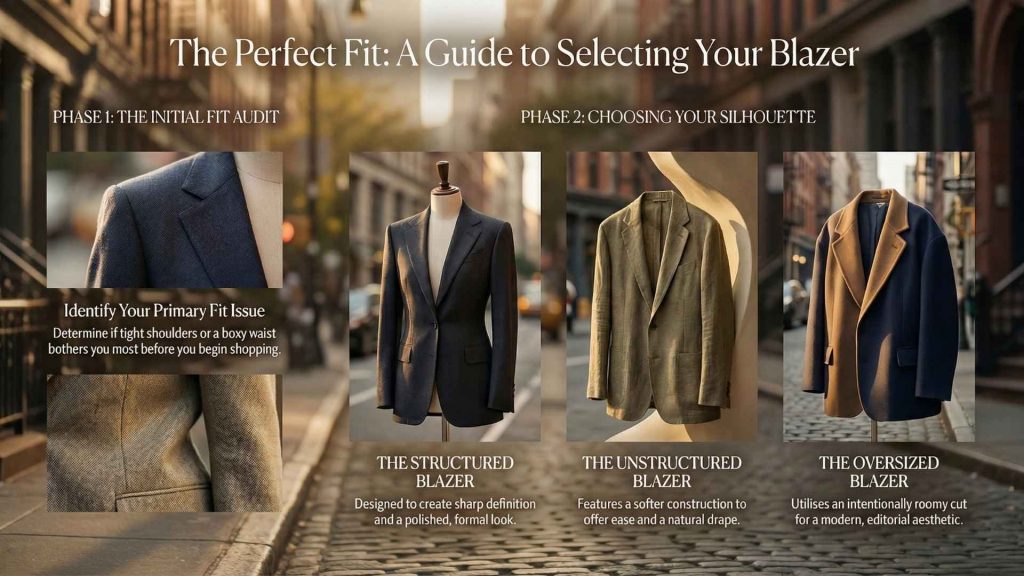
Step one: Find your priority fit issue. What bothers you most? Is it tight shoulders or a boxy waist? Identify this before shopping.
Step two: Understand three silhouette types. Structured blazers create sharp definition. Unstructured styles offer soft ease. Oversized cuts are intentionally roomy. Know which one suits your life.
Step three: Apply smart style logic. Use these nuanced guidelines, not rigid rules.
- For broader shoulders or a full bust: Seek long, open V-necklines. Darted seams will provide shape. Avoid stiff, boxy fabrics completely.
- For a straight or narrow frame: Try peak lapels for width. Slight shoulder padding helps. Belts can create a defined waistline.
- For wider hips and thighs: Focus on structured shoulders. Ensure the hem hits at the hip bone. This balances your proportions beautifully.
- If you are under 5’4″: Cropped lengths are your friend. Petite-specific sizing changes everything. Narrow lapels keep the look in scale.
- If you are tall or long-waisted: Look for longline and tall cuts. You can carry heavier fabrics well. Bold prints often work wonderfully.
This is how you pick the perfect blazer for you.
Step four: Choose the right fabric. This is crucial for comfort. Hot climates need linen or tropical wool. Cooler areas require medium-weight wool. Formal settings demand natural fibers like wool. Trend pieces can use blends.
Common Mistakes Everyone Makes
Ignoring shoulder fit is the top error. Never compromise here. Do not choose trend over timelessness for a core piece. Always do the “move test” in the dressing room. Forgetting about tailoring costs is a common budget mistake. Do not buy a blazer that needs shoulder adjustments. That alteration is rarely worth the price.
Your Checklist to Pick the Perfect Blazer
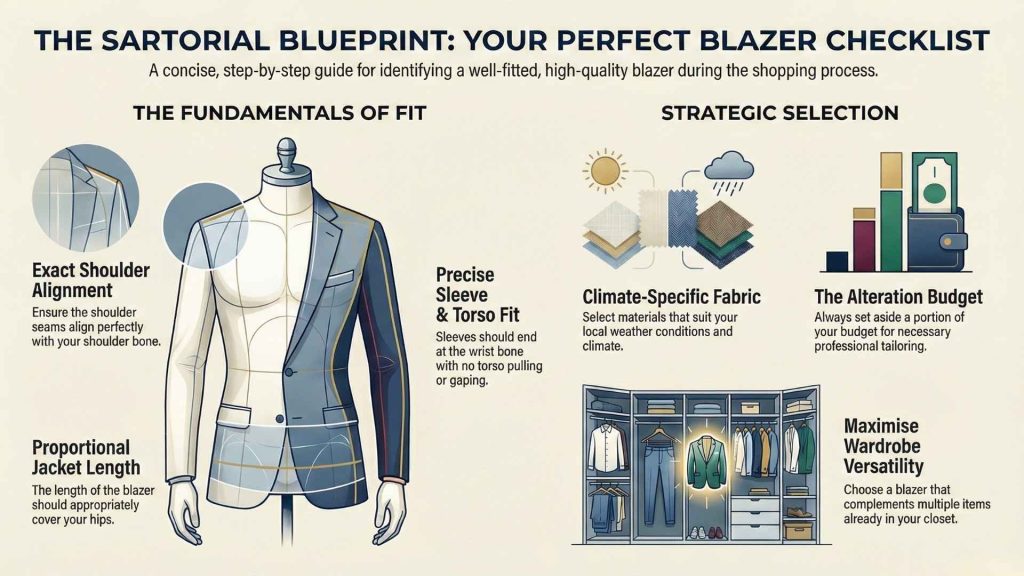
Take this list with you when you shop.
- Shoulder seams align with my shoulder bone exactly.
- Sleeves end right at my wrist bone.
- It buttons without any pulling or gaping.
- The length covers my hips appropriately.
- The fabric suits my local climate perfectly.
- I have a budget for necessary alterations.
- It works with multiple items in my closet.
This checklist will help you pick the perfect blazer every time.
How to Choose the Best White Sneakers for Men: The 2026 Guide
Smart Shopping for the US Market
Regional needs differ greatly across the US. Humid Southern states need breathable fabrics. Look for unlined linen or cotton blends. Northern winters demand wool blends and full lining. Consider your daily environment. A New Yorker walks everywhere. A Californian drives. Your blazer needs to fit that life.
Your local tailor is a secret weapon. Simple fixes are affordable. Sleeve shortening costs $15-$50. Taking in the sides runs $30-$80. Factor this into your budget upfront. This step is essential to finally pick the perfect blazer.
Frequently Asked Questions
What is the most versatile blazer style?
A two-button, single-breasted style is best. Mid-weight wool works for many seasons. A notch lapel offers a classic look.
Can a blazer be altered later?
Yes, within clear limits. Side seams can be taken in or let out. Shoulder alterations are complex and often not advised.
How much should I spend?
Budget $50-$150 for fast-fashion options. Mid-tier quality ranges from $150-$350. Investment pieces start over $400. Always include tailoring costs.
Blazer, sport coat, or suit jacket?
A suit jacket matches specific trousers. A sport coat is casual and often patterned. A blazer is versatile and solid-colored. Start with a classic blazer.
The Final Word
Learning how to pick the perfect blazer is a skill. It combines knowledge of fit and self-awareness. Use the fit framework first. Apply the style logic second. Remember the power of a good tailor. You can build a wardrobe you love. It starts with one perfect blazer.
Disclaimer: This guide provides informational advice only. Personal style and fit are subjective. Alteration costs are average US estimates. They can vary by city and tailor. Consult a professional for major changes.