
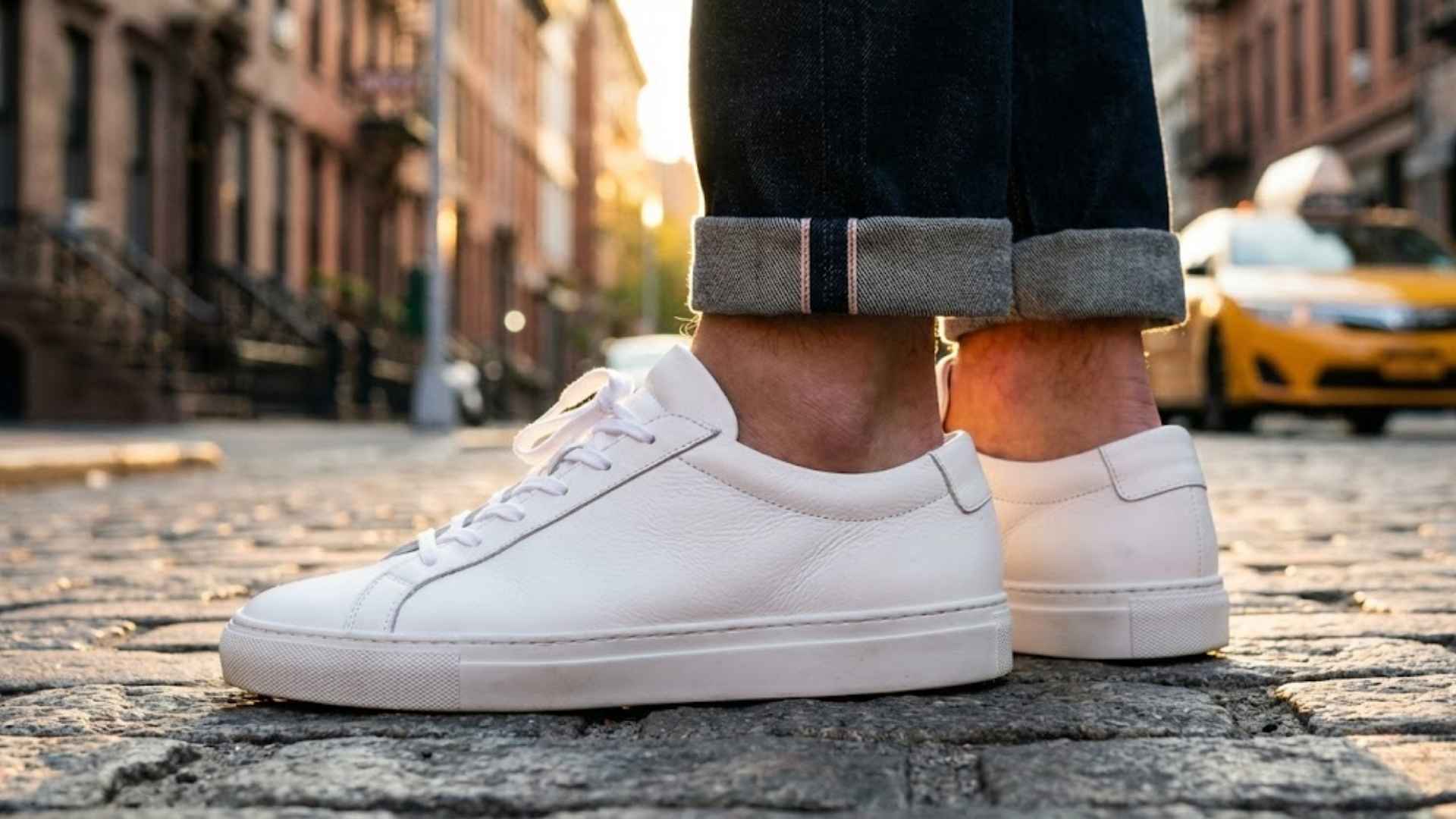
Your quest for the perfect pair of white sneakers shouldn’t feel like a gamble. With endless options, contradictory advice, and price tags that can soar into the hundreds, it’s easy to buy a pair that looks great in photos but feels all wrong on your feet.
This guide cuts through the noise with a systematic, expert-vetted process that prioritizes your lifestyle, foot shape, and personal style over fleeting trends. We’ve analyzed top reviews, real-user pain points from fashion communities, and long-term wear tests to build a foolproof selection framework.
Why Most Men Choose the Wrong White Sneakers (And How to Avoid It)
The common mistake is focusing on brand name or a single feature—like “minimalist” or “comfort”—in a vacuum. A shoe praised for its sleek profile might be torturous for wide feet. A highly cushioned “comfort” sneaker might look out of place with chinos. The solution is to treat your search like a series of filters, where each decision narrows the field toward your ideal pair.
Think of your perfect white sneaker as having four pillars: Silhouette, Material, Construction & Comfort, and Fit. Getting these right requires honest self-assessment about how you’ll actually wear them.
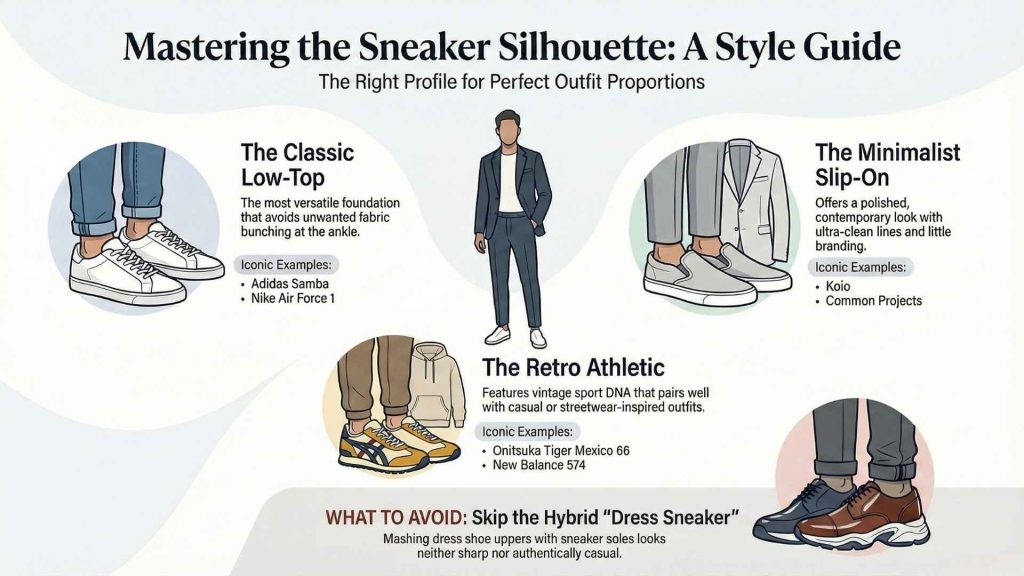
Filter 1: Define Your Silhouette & Style Profile
This is about the shoe’s shape and its role in your wardrobe. The wrong silhouette can throw off your entire outfit’s proportion.
- The Classic Low-Top: Your most versatile foundation. A clean low-top is appropriate for far more occasions than a high-top and avoids unwanted fabric bunching at the ankle. This category includes timeless profiles like the Adidas Samba (sleek and sporty) and the Nike Air Force 1 (bold and iconic). The low-top is the undisputed starting point for a first pair.
- The Minimalist Slip-On: Characterized by ultra-clean lines, often with little to no visible branding. This is for a polished, contemporary look. Brands like Koio and Common Projects excel here, but be mindful: some minimalist designs run notoriously narrow.
- The Retro Athletic: These sneakers have vintage sport DNA, like the Onitsuka Tiger Mexico 66 or New Balance 574. They offer more visual detail and texture, pairing exceptionally well with casual or streetwear-inspired outfits.
- What to Avoid: Dress Sneakers. Hybrids that try to mash a dress shoe upper onto a sneaker sole almost universally fail, looking neither sharp nor authentically casual.
Filter 2: Choose the Right Material for Your Life
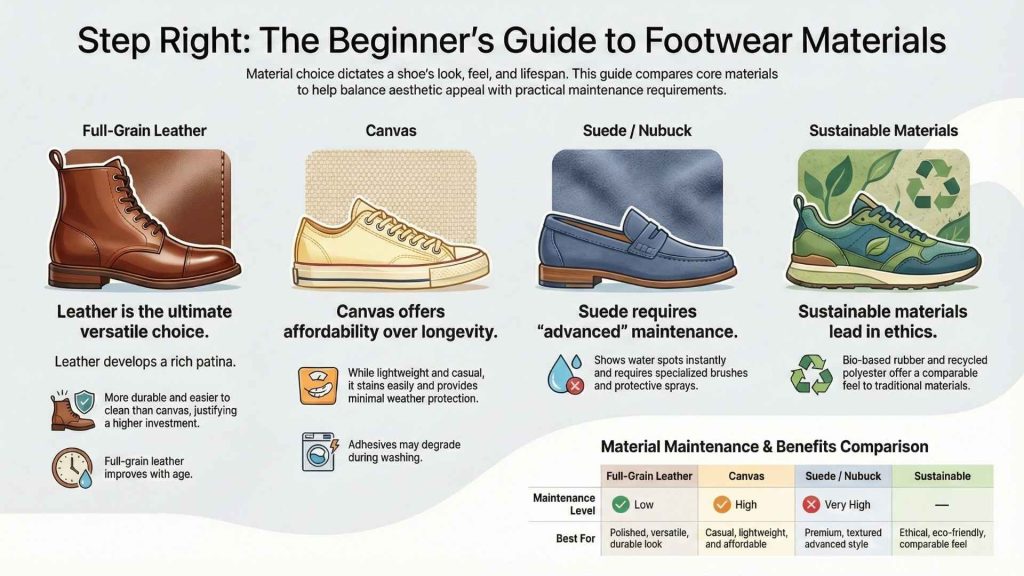
Material dictates look, feel, maintenance, and durability. This is a primary point of confusion for beginners.
| Material | Best For | Key Considerations | Maintenance Level |
|---|---|---|---|
| Full-Grain or Calfskin Leather | A polished, versatile look; durability; easy cleaning. | Develops a rich patina over time. Can require a break-in period. | Low. Wipe with damp cloth; use leather cleaner for stains. |
| Canvas (e.g., Converse Chuck Taylor) | A casual, lightweight, and affordable option. | Less durable, stains easily, offers minimal support or weather protection. | High. Hard to deep-clean; machine washing may degrade adhesives. |
| Suede or Nubuck | A premium, textured look for advanced style. | Not for beginners. Shows water spots and stains instantly. | Very High. Requires protective spray and specialized brushes. |
| Sustainable Materials (e.g., bio-based rubber & recycled polyester) | Eco-conscious buyers. | Often comparable in feel to traditional materials; a standout for ethical production. | Varies by composite; generally easy-care. |
The Verdict: For a first and most versatile pair, leather is the recommended choice. It’s more durable and easier to keep clean than canvas, justifying a higher initial investment.
Filter 3: Assess Construction & All-Day Comfort
Look beyond marketing claims. A shoe’s comfort is engineered through its components.
- The Sole: A cupped rubber sole stitched to the upper (a “cupsole”) is a mark of quality and longevity, preventing delamination. A simple glued-on sole is common on cheaper models.
- The Insole/Midsole: For all-day wear, seek removable Ortholite or similar foam footbeds. They provide cushioning and breathability. For walking-heavy days, sneakers with dedicated midsole technology (like Nike Air or Adidas Boost) offer superior comfort but often add visual bulk.
- The Lining: A breathable fabric lining enhances comfort. Some premium sneakers feature leather-lined heels for a smoother feel and reduced wear on socks.
- The Break-In: Know what to expect. Leather sneakers often need a break-in period of a few wears to soften and mold to your foot. Don’t judge comfort straight out of the box.
Filter 4: Get the Fit Perfect
A perfect fit is non-negotiable. Sizing is the most common pitfall.
- Size Strategically: Brands vary wildly. Nike Air Force 1s famously run large (often requiring a half-size down), while some European brands run small. Always check brand-specific reviews for sizing advice.
- Width Matters: If you have wider feet, the “slim minimalist” route may be painful. Seek out brands offering multiple widths. The Nike Monarch IV, for example, is praised for its comfort and comes in an Extra Wide option.
- The Thumb Test: There should be about a thumb’s width (roughly ½ inch) of space between your longest toe and the end of the shoe when standing.
Your 5-Step Action Plan for Choosing
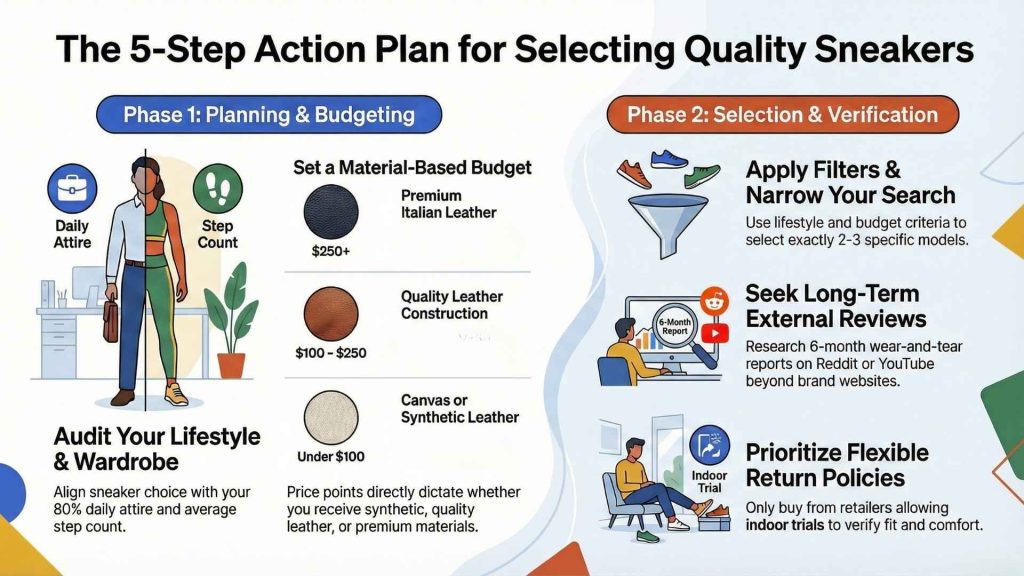
- Audit Your Wardrobe & Lifestyle: What will you wear these with 80% of the time? Jeans and tees? Chinos and button-downs? Also, estimate your average daily step count.
- Set a Realistic Budget:
- Under $100: Expect quality canvas or synthetic leather. Focus on value brands.
- $100 – $250: The sweet spot for quality leather construction from brands like Onitsuka Tiger, Veja, or Everlane.
- $250+: Premium materials (e.g., Italian leather), meticulous craftsmanship, and minimalist designs from brands like Koio or Common Projects.
- Apply the Four Filters: Use the criteria above to narrow your search to 2-3 specific models.
- Research & Read Real Reviews: Go beyond the brand’s website. Search for long-term (6+ month) reviews on Reddit, YouTube, and detailed review sites that discuss wear and tear.
- Buy from a Retailer with a Good Return Policy: This allows you to try the sneakers indoors to verify fit and comfort.
Common Mistakes to Avoid
- Ignoring Climate: In humid southern states, breathable mesh or perforated leather is crucial. For rainy climates, avoid suede and canvas.
- Neglecting Arch Support: If you have high arches or plantar fasciitis, a flat insole (like Converse) will cause pain. Look for models with arch support or plan to use orthotic inserts.
- Prioritizing Price Over Cost-Per-Wear: A $80 sneaker that falls apart in a year is worse value than a $200 sneaker that lasts four.
- Choosing a Gum Sole for “Cleanliness”: Gum soles show dirt differently and can create a distracting, heavy look that’s harder to style than a clean white sole.
The White Sneaker Buyer’s Checklist
Before you click “buy,” your chosen pair should check these boxes:
- Silhouette complements your typical outfits (low-top, minimalist, etc.).
- Material matches your maintenance willingness (prioritize leather).
- Construction features (sole, lining, insole) align with your comfort needs.
- Fit accounts for brand-specific sizing and your foot width.
- Reviews confirm long-term durability and comfort.
- Retailer offers a clear, hassle-free return policy.
USA-Specific Considerations & Nuance
For readers in walkable urban centers like NYC or Chicago, prioritize durable outsoles with substantial tread and cushioning. The constant pavement pounding demands it. In sunny, dry climates like the Southwest, be aware that pure white midsoles can oxidize and yellow faster; off-white or cream options can be a more practical and stylish choice that hides this aging process. Remember, the “best” sneaker is highly personal. What works for a 22-year-old in Brooklyn may not suit a 45-year-old in suburban Texas.
Frequently Asked Questions
For your first serious pair, leather is almost always the better investment. It is more durable, easier to clean, and transitions more easily from casual to smart-casual settings. Canvas is a more casual, low-stakes option but requires much more maintenance.
Comfort is subjective, but models with modern athletic cushioning excel here. The Nike Air Force 1 (with Nike Air units) and the Adidas Samba/ Gazelle (with cushioned insoles) are frequently praised. For maximum comfort with a less sporty look, the Nike Monarch IV is a top pick for supportive, all-day wear.
Avoid ultra-slim minimalist designs. Instead, look for models known for a roomier fit or those offered in wide widths. The Nike Air Force 1 has a relatively wide toe box, and the Nike Monarch IV is explicitly available in an Extra Wide size, making it a standout choice.
This is a common request for men with athletic builds. Consider the Koio Capri, which has a slightly more substantial silhouette than brands like Common Projects. The Veja Campo or Veja V-90 also offer clean designs with a bit more structure and weight, avoiding the overly delicate look.
You need a hybrid: stylish enough for dinners, comfortable for walking, and durable. The Onitsuka Tiger Mexico 66 is a prime candidate—it’s lightweight, surprisingly cushioned, and has a timeless, low-profile design that works globally. A clean leather Adidas Samba is another excellent, versatile choice.
Disclaimer: This guide is for informational purposes only. Product specifications and availability may change. Always verify sizing and return policies directly with the retailer before purchasing. The best sneaker is the one that fits your feet and lifestyle perfectly.