

Let me ask you something about your Streetwear closet wardrobe. Do you really like how you have organised the cloths there. I know you don’t. I was also in some similar situation and so for the same reason i have tested many things here and there online and found something useful basically. Build a Minimalist Streetwear Wardrobe Guide ultimately aimed to provide you all the aspects of it. Maybe some of which you are already missing.
You may ask here what i have done extra. I just moved beyond basics generic list and provided a strategic framework. You will find how you can do the selection, combining and maintain curated collection of clothing. Also you will discover the essential pieces that form the non-negotiable foundation, learn advanced styling techniques for maximum impact, and understand how to achieve a refined, personal style with a minimal number of high-utility items.It’s about cultivating intentionality, where every item you own is versatile, quality-built, and authentically you.
Minimalist Streetwear Wardrobe Idea
Minimalist streetwear wardrobe capsule for men or women is more than just a fashion choice; it’s a deliberate approach to personal style that champions quality, versatility, and intentionality. It strips away the noise of fast-paced trends and logos to focus on clean silhouettes, premium fabrics, and a cohesive color palette. The goal is not to dress blandly, but to cultivate a wardrobe where every piece is functional, interchangeable, and expresses a refined urban aesthetic.
This movement is gaining momentum. Because it addresses a modern need. By reducing the hassle of choosing, you can save money in the long run and develop your style that reflects your personality. It combines the “complete wardrobe” concept with the comfort and modern style of streetwear to create a practical wardrobe that meets all your needs.
Foundational Principles: Your Wardrobe’s Blueprint
Before purchasing a single item, internalize these three core principles. They will guide every decision and ensure your wardrobe remains cohesive and effective.
- Prioritize Quality Over Quantity: Minimalism is inherently sustainable. Invest in pieces made of quality materials, like natural cotton, French wool and durable bargain. They will last a long time and will keep looking good in the long run. To assess quality, examine seams. The seam should be smooth. Synthetic or woven by um good touch. It should not be thin and fragile. A $70 thick woven t-shirt that lasts years is a smarter investment than five $20 t-shirts that lose their shape over time.
- Embrace a Cohesive Color Story: Your wardrobe needs to function as an integrated system. Start with colors like basic black, white, gray and teal. This neutral is infinitely versatile and creates a sophisticated modern look. Then, you can add one or two earth tones or neutrals like olive green, charcoal, and charcoal for depth. These are the simple rules. All tops should be able to match all bottoms. This will enhance the cohesiveness of your outfit from a minimalist outfit.
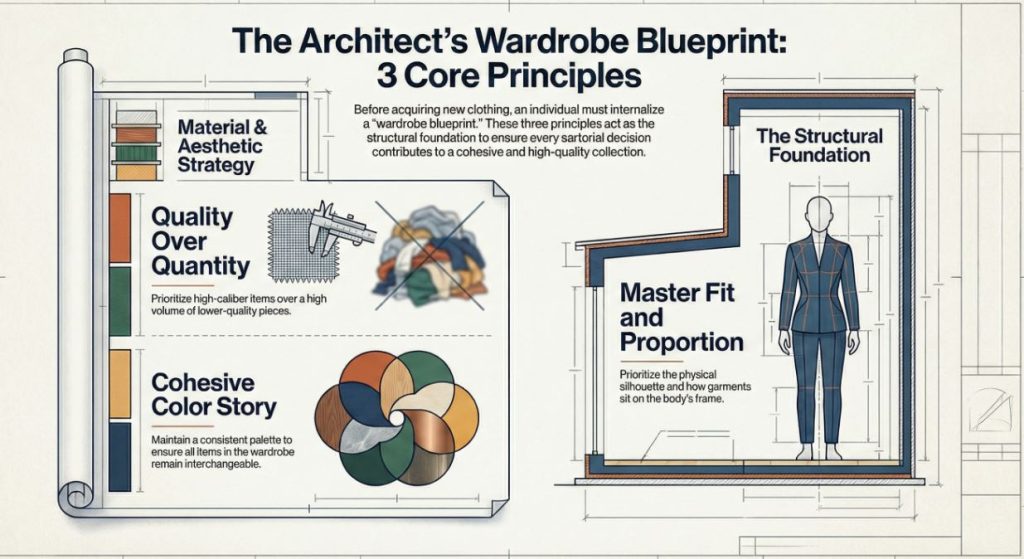
- Master Fit and Proportion: The label “minimal” does not mean “tight” or “form-fitting.” Key silhouettes for 2026 include comfortable, oversized, balanced and more slim or straight-leg pants for tops and outerwear. The key lies in size balancing— like for an example, pairing an oversized hoodie with crisp pants creates a strong, intentional look. Fit is paramount; You should know it even the most expensive cloth will look cheap if it dont fit properly. If you struggle with arm or torso length, look for brands that offer elongated or increased sizes.
Essential Piece Checklist: Core Building
The list below focuses on the multi-directional items that form the main core or the backbone of a Minimalist Streetwear wardrobe. Make use of it as your primary shopping and auditing guide. Consider this as a “INVESTMENTS” that will make the real difference.
See the TABLE Closely
| Category Item | Attributes & Notes | Why Essential & The Tip |
|---|---|---|
| The Oversized White Tee | In one word “The Ultimate Layering Peice”.Look for a heavyweight fabric (over 6.5 oz) that holds its shape and isn’t sheer. A slightly dropped shoulder seam enhances the modern silhouette. | Provides a clean canvas for any outfit; endlessly versatile. Pro Tip: Always buy two of your perfect white tee—they are foundational and will get the most wear. |
| Relaxed-Fit Trousers | Opt for tailored trousers in black wool or cotton canvas cargo styles with a slight taper. Ensure the hem rests cleanly at the top of your shoe. | Pairs with any footwear. Pro Tip: A 30″ inseam is a versatile starting point. |
| A Neutral Hoodie | Avoid loud graphics. A premium hoodie in grey, black, or beige focuses on fabric (brushed-back fleece or French terry) and cut. Consider a look for a structured hood and robust ribbing. | This is for comfortable, credible streetwear. Pro Tip: Size up once for a intentionally relaxed fit that layers easily over other tops. |
| Structured Denim / Utility Jacket | An essential layer: choose an oversized denim jacket in a medium wash or a utility vest for texture and function. | Adds structure to any layered outfit. Pro Tip: It’s a versatile |
| Chunky, Minimalist Sneakers | The “dad shoe” evolves. Look for sleek, monochromatic designs with chunky soles. White, grey, or black colorways offer maximum versatility. Keep them clean. | Modern, comfortable, and foundational. Pro Tip: Make this your priority footwear investment. |
| A Versatile Tote or Crossbody Bag | Function meets form. A minimalist tote in leather or heavy canvas, or a sleek crossbody bag, adds utility without clutter. Avoid logos and opt for clean lines. | It completes your look and is essential daily. Pro Tip: Always measure your tech first for a perfect fit. |
Building the System: From Concept to Closet
What people make a common mistake is buying isolated “staple” pieces. Just know that they don’t work together. Instead make sure to adopt a systematic approach to build a true wardrobe, not just a collection of clothes.
1. The Lifestyle Audit:
First, conduct a audit of your current closet. Remove everything. Be honest: What do you actually wear? What has tags still on it? This clears mental and physical space. Next, analyze how you actually spend your time. Create a simple percentage breakdown: Work (%), Weekend Casual (%), Social/Going Out (%), Active/Gym (%). For most, 70-80% of outfits will be casual. Build your core for that reality first. Don’t buy a $300 designer shirt if you work from home in a t-shirt.
2. The “Module” Method for Guaranteed Versatility:
This is the most effective way to ensure mix-and-match potential and prevent orphaned items. A module is a small, complete outfit building block centered on a color:
- The Black/Grey Module: 2 Bottoms (black trousers, grey sweatpants), 3 Tops (black tee, grey hoodie, grey sweatshirt), 1 Outer Layer (black overshirt), 1 Pair of Shoes (black sneakers).
- The Earth Tone Module: 2 Bottoms (olive cargos, beige trousers), 3 Tops (white tee, beige crewneck, striped long-sleeve), 1 Outer Layer (denim jacket), 1 Pair of Shoes (white sneakers).
Your entire wardrobe is just 2-3 of these parts combined. Start by building one complete module you love, wear it exclusively for two weeks, and note what you wish you had. Then, expand strategically into your second module.
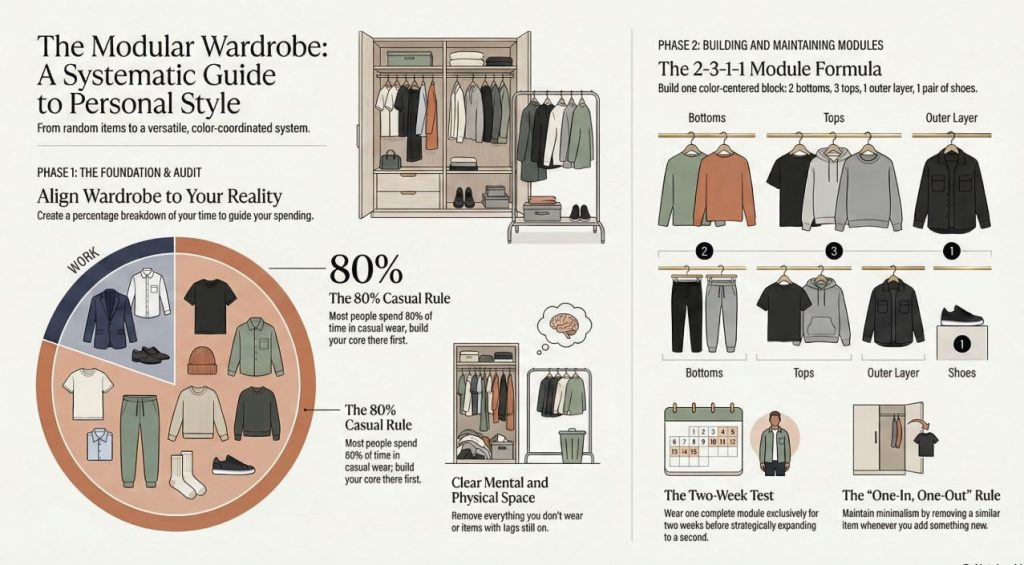
3. Implement a “One-In, One-Out” Rule:
To maintain minimalism and prevent closet creep, commit to removing a similar item for every new piece you add. Bought a new premium hoodie? Donate or sell an older, lesser-quality one. This forces continuous curation and ensures your closet quality elevates over time.
Budget & Sourcing: Building Wisely Across Tiers
Building a quality wardrobe is an investment, but it doesn’t require a massive upfront spend. A strategic, tiered approach is key.
- The Hybrid Investment Strategy: Allocate your budget like a pyramid. The base (60%) is for high-quality, high-use basics: tees, socks, standard trousers. The middle (30%) is for seasonal staples: your best hoodie, a great pair of jeans, your primary sneakers. The top (10%) is for signature pieces: that one perfect jacket or a unique bag that defines your look for years.
- Smart Shopping Tactics for the U.S. Market: Time your purchases. Major holiday sales (Memorial Day, July 4th, Labor Day) and end-of-season clearances (January, August) are ideal for stocking up on basics and staples. Subscribe to newsletters from your favorite brands for early access. For investment pieces, explore reputable online resale platforms—often you can find barely-worn items from premium brands at 40-60% off.
- USA-Centric Brand Considerations: Build a shortlist. For impeccable basics, look to brands like Everlane (transparent pricing), Uniqlo U (designer collaborations at accessible prices), and Kotn (premium Egyptian cotton). For mid-tier staples with strong design, Madewell, Levi’s Premium, and Taylor Stitch are excellent. For your investment tier, explore A.P.C., Reigning Champ, or Norwegian Rain for outerwear.
Styling for Maximum Impact: Beyond the Basics
With your core pieces in place, styling is where your personal flair shines. Minimalism provides the stage; your combinations are the performance.
- Advanced Layering for Depth: Master the three-layer rule. 1) Base Layer: a tee or turtleneck. 2) Mid Layer: a hoodie, button-down shirt, or lightweight sweater. 3) Outer Layer: your jacket or coat. Vary textures within each layer—a ribbed tee under a smooth shirt under a technical nylon jacket creates visual interest without color.
- Playing with Texture and Subtle Detail: Monochromatic outfits come alive through texture. Combine a cable-knit sweater with waxed cotton trousers. Pair a fleece hoodie with a leather crossbody bag. Seek out pieces with interesting but subtle details: bartack reinforcements, custom metal hardware, or unique seam construction.
- The Rule of One Accessory: Choose one intentional accessory to define a look. A simple silver chain necklace. A quality watch with a leather strap. A clean, unstructured baseball cap in a neutral tone. The goal is a single point of focus that doesn’t compete with your clean silhouette.
Mistakes that are common and Avoid
- Mistaking “Minimal” for “Boring”: Minimalism is about considered editing, not elimination of personality. You can still express yourself through unique silhouettes (wide-leg pants), interesting fabrics (bouclé knit, cord), and a single statement piece per outfit. The statement just becomes more powerful when it’s not surrounded by clutter.
- Ignoring Fabric Care: You’ve invested in quality; now maintain it. Learn basic care: wash darks in cold water, turn garments inside out, air-dry knits and denim to prevent shrinkage and preserve fabric integrity. A fabric shaver (lint remover) is a minimalist’s best friend for reviving pilled sweaters and hoodies.
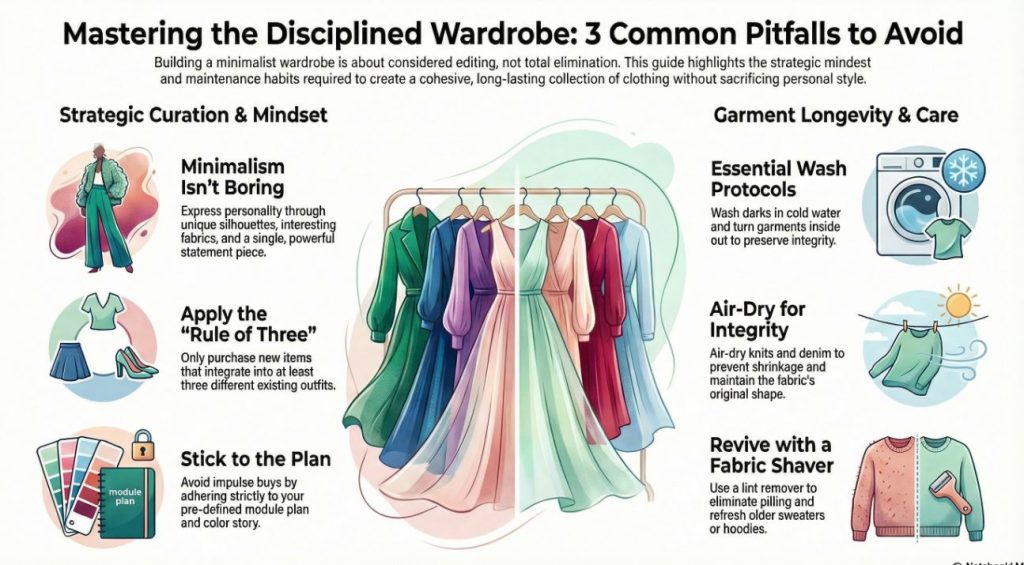
- Building Too Fast and Without a Plan: This is the most common pitfall. Impulse buys are the enemy of a cohesive wardrobe. If a new item doesn’t fit into at least three different outfits with your existing clothes, do not buy it. Stick to your module plan and color story.
Frequently Asked Questions (FAQs)
The 70/30 rule is a practical guideline for building a versatile closet. It suggests that 70% of your wardrobe should consist of timeless, high-quality foundational pieces (like the neutral tees, trousers, and hoodies outlined in our checklist). The remaining 30% can be dedicated to trend-driven items, statement pieces, or seasonal color that reflects your personal taste. This ratio ensures your wardrobe remains stable and functional year after year while still allowing room for fun and self-expression without veering into fast-fashion chaos.
The 5 outfit rule is a strategic filter for new purchases. Before buying any new clothing item, you should be able to mentally visualize at least five distinct outfits you can create with it using pieces you already own. This rule forces you to consider versatility and integration, preventing impulse buys that become “wardrobe orphans.” It directly supports the “Module Method” discussed earlier, ensuring every new addition actively increases your outfit combinations and works within your established color story.
It is related to sustainability and mindful consumption. It proposes that before making a purchase, you should ask yourself if you will wear the item at least seven times. Some stricter versions extend this to 30 wears. The core principle is to shift your mindset from “Do I want this?” to “Will I use this?” It encourages buying for longevity and real life, aligning perfectly with the minimalist ethos of quality over quantity. If you can’t confidently see yourself reaching for an item seven times, it’s likely not a worthwhile addition to a minimalist wardrobe.
Conclusion: Make A Lasting Style
Building a minimalist streetwear wardrobe is a rewarding exercise in intentionality. It’s about creating a personal uniform that feels effortless, looks consistently sharp, and liberates you from the cycle of wasteful consumption. This isn’t a one-week project but an evolving practice. By starting with a neutral foundation, investing strategically in quality, and building your closet with the modular system, you cultivate a style that is sustainable, authentic, and uniquely yours. Remember, the most powerful statement in today’s crowded world is often made through focused, considered simplicity. Your wardrobe becomes a tool for confidence, not a source of stress.
Disclaimer: This guide is for informational purposes only. Fashion is subjective, and personal style should always reflect individual comfort and preference. All brand mentions are for illustrative purposes based on current trends and are not endorsements. Prices, availability, and styles may change.