
Streetwear isn’t just clothing; it’s a language. And How to style Streetwear is a vibe as It speaks of subcultures, confidence, and a deliberate disregard for traditional fashion rules. Yet, for every person who looks effortlessly cool in an oversize hoodie and chunky sneakers, another feels lost—drowned in fabric or unsure how to mix a luxury piece with their favorite graphic tee. The core frustration isn’t a lack of items; it’s a lack of a framework. Generic advice like “just wear what you like” ignores the nuanced principles that transform separates into a cohesive, intentional look.
This guide moves beyond product lists. We will deconstruct the “how” and “why” behind successful street-wear styling, providing you with a actionable system that accounts for climate, body type, and personal authenticity. By the end, you’ll understand how to manipulate proportion, master texture, and build a wardrobe that works for your real life in the U.S., ensuring you look styled, not sloppy. Now lets decode How to Style Streetwear.
The Streetwear Mindset: Beyond Logos and Hype
To style your streetwear effectively, you must first understand its evolution. Born from the interconnected worlds of skateboarding, hip-hop, and surf culture in the late 80s and 90s, streetwear was fundamentally about identity and utility. It was wearable rebellion. Today, it has been embraced—and reshaped—by high fashion, but its soul remains in accessibility, comfort, and statement-making.
The modern challenge is navigating this hybrid landscape. Is it still streetwear if it’s a $1,000 designer hoodie? The answer is yes, if the philosophy remains. Contemporary streetwear is characterized by several key pillars:
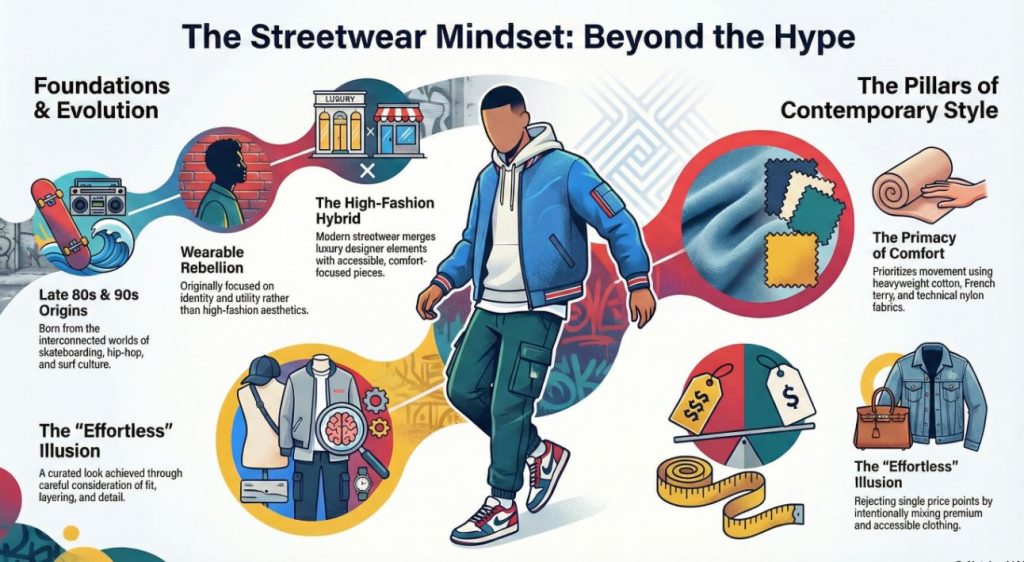
- The Primacy of Comfort: Fabrics are soft, forgiving, and made for movement—think heavyweight cotton, French terry, and technical nylon.
- Cultural References: It often incorporates nods to music, art, gaming, or sports, serving as a wearable mood board.
- The High-Low Dialogue: The intentional mixing of premium and accessible pieces is a core tenet, rejecting the idea that style has a single price point.
- The “Effortless” Illusion: This is the most misunderstood element. The curated “I-threw-this-on” look is almost always a product of careful consideration regarding fit, layering, and detail.
The goal is not to look like a mannequin from a specific store, but to look like you—a more confident, considered version of yourself who understands the rules well enough to strategically break them.
Foundational Framework: Four Principles for Every Outfit
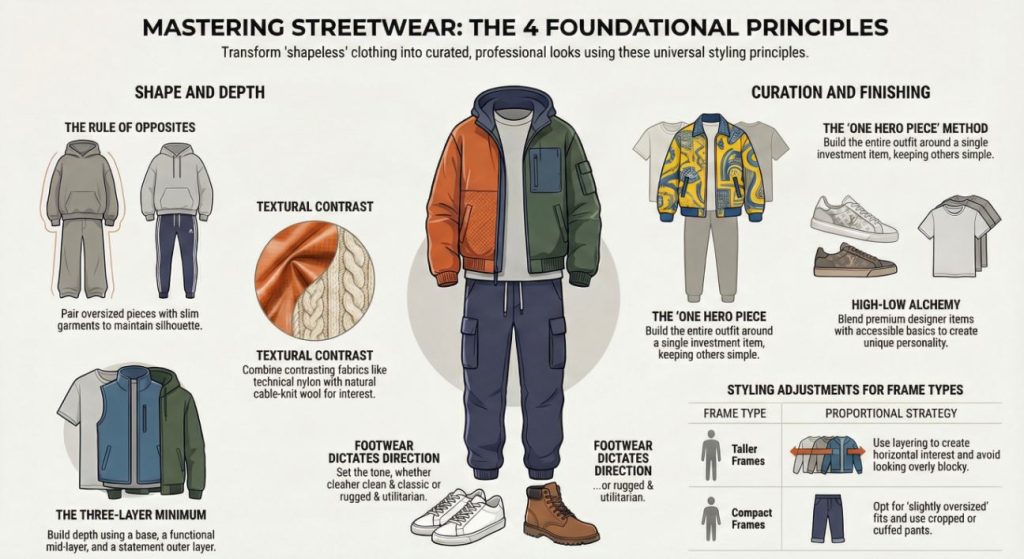
For understanding How to Style Streetwear it is important to understand that Styling success hinges on applying four universal principles every time you get dressed. Think of them as your style checklist.
1. The Proportional Masterclass: Balancing Volume and Line
This is the single most important skill. Streetwear frequently plays with oversized silhouettes, but without balance, the result is shapeless.
- The Rule of Opposites: Pair volume with restraint. An oversized, boxy shirt jacket demands slim or straight-leg trousers. Conversely, baggy, wide-leg cargo pants sing when paired with a fitted tank top or close-fitting sweater.
- Defining the Silhouette: Your body’s shape should still be perceptible. Use techniques like a front tuck (the “French tuck”) to break up a long top and define your waistline. Rolling sleeves or cuffing pants creates intentional breaks that structure the outfit.
- Body-Type Nuance: This is where generic guides fail.
- For taller frames: You can carry more volume on top and bottom, but be wary of looking overly blocky. Use layering to create horizontal interest.
- For shorter or more compact frames: Opt for slightly oversized, not drowning. A dropped shoulder is fine, but the seam shouldn’t be halfway down your bicep. Keep pants cropped or neatly cuffed to avoid stacking fabric at the ankle, which shortens the leg line.
2. Strategic Layering: Creating Depth and Function
Layering is the engine of streetwear’s visual interest and practicality. It’s about creating slices of color, texture, and weight.
- The Three-Layer Minimum (for cooler weather): Build a simple, effective system:
- Base Layer: A fitted tee, turtleneck, or tank in a neutral color.
- Mid Layer: The workhorse. A hoodie, flannel shirt, lightweight sweater, or vest. This layer often provides the pop of pattern or color.
- Outer Layer: The statement. A chore coat, puffer jacket, bomber, or oversized blazer.
- Textural Contrast: This is what separates pros from amateurs. Combine fabrics that play off each other:
- Rugged vs. Refined: A waxed canvas trucker jacket over a soft, brushed fleece hoodie.
- Technical vs. Natural: A sleek, nylon windbreaker over a textured, cable-knit sweater.
- Hard vs. Soft: A leather biker jacket over a slub cotton graphic tee and sweatpants.
3. The High-Low Alchemy: Blending Premium and Accessible
Mixing price points isn’t just economical; it’s intelligent styling. It adds personality and prevents you from looking like a head-to-toe brand advertisement.
- The “One Hero Piece” Method: Build your outfit around one investment item. If your focus is designer sneakers, let them shine by pairing them with dark, simple denim and a solid-color tee. If it’s a statement jacket, ground it with basic chinos and classic trainers.
- Elevating the Everyday: The reverse is equally powerful. Take a generic black hoodie and elevate it with tailored trousers and luxury leather boots. This juxtaposition is inherently cool and individual.
- Avoiding Logo Clash: If your high-end piece has prominent branding (like a Gucci logo tee), keep everything else quiet. Let that one logo tell the story.
4. Accessory Intelligence: The Finishing Punctuation
Accessories are not an afterthought; they are the final edit. They tell observers you paid attention.
- Footwear Dictates Direction: Your shoes set the entire tone.
- Clean Classic Sneakers (Adidas Stan Smith, Nike Air Force 1): Versatile, works with almost any streetwear-adjacent look.
- Chunky Sneakers (New Balance 990s, Balenciaga Triples): Add a sporty, utilitarian edge. Balance with simpler, more streamlined clothing.
- Designer or High-Fashion Sneakers: Treat as a hero piece. Use the “One Hero Piece” method.
- Boots (Timberlands, Doc Martens, Chelsea boots): Add ruggedness or a sharper edge, perfect for transitioning streetwear into fall/winter or a smarter-casual context.
- Hats & Bags: A structured baseball cap can add a sporty finish. A beanie lends a casual, urban feel. Your bag should be functional—a minimalist crossbody or a utility-inspired tote—and not overly formal.
- Jewelry: Less is often more. A simple chain necklace, a few stacked rings, or stud earrings can add a personal signature without overwhelming the look.
The Streetwear Stylist’s Toolkit: Building a Versatile U.S.-Ready Wardrobe
You don’t need a closet bursting with hype. A curated selection of versatile basics forms the foundation for endless combinations. Here is a U.S.-centric wardrobe essentials list, considering price tiers.
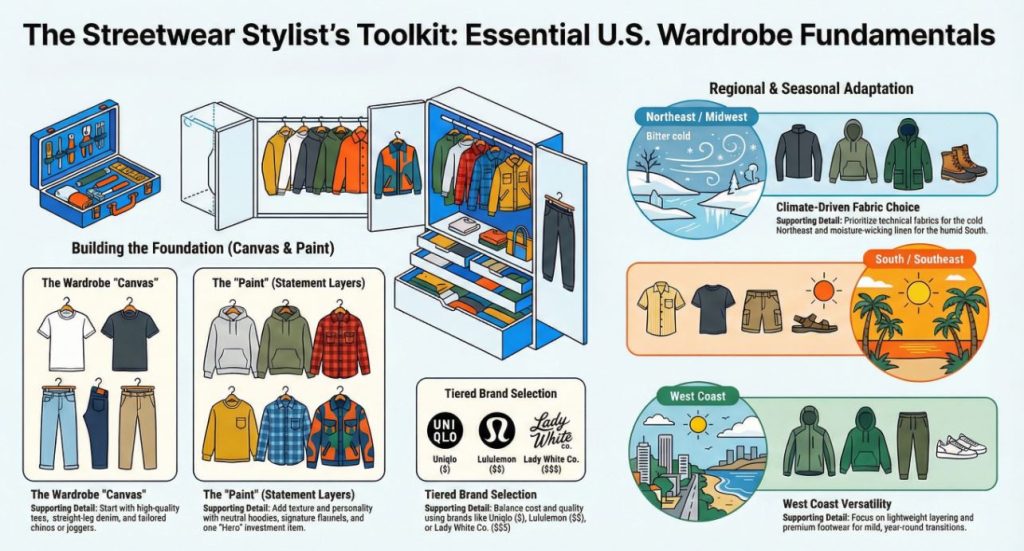
The Essential Foundation (The Canvas):
- Tees: 3-4 high-quality plain tees (white, black, grey, heather). Look for a good weight (not see-through) and a fit you like. Brands: Uniqlo (U), Everlane ($$), Lady White Co. ($$$).
- Denim: One pair of well-fitting straight-leg or slightly tapered jeans (dark indigo or black). One pair of vintage or light-wash jeans for contrast.
- Pants: One pair of tailored chinos (olive or khaki). One pair of quality sweatpants or joggers (not shiny athletic wear). Brands: Lululemon ($$), Vuori ($$).
- Outerwear Foundation: A versatile jacket like a denim trucker, a utility chore coat (Dickies, Carhartt WIP), or a simple bomber.
The Statement & Layer Pieces (The Paint):
- Hoodies & Sweatshirts: 1-2 in neutral colors (black, grey, oatmeal). Opt for interesting textures like fleece-back or brushed cotton.
- A Signature Flannel or Shirt Jacket: Perfect for layering, adds pattern and texture.
- One “Hero” Item: This is your investment—could be the perfect leather jacket, a coveted pair of sneakers, or a unique graphic piece from an artist you love.
U.S. Regional & Seasonal Adaptation Table:
| Region / Season | Key Challenges | Style Solutions & Recommended Pieces |
|---|---|---|
| Northeast / Midwest Winters | Bitter cold, snow, layering for warmth without bulk. | Focus on technical fabrics. Thermal base layers, heavyweight hoodies (Carhartt), insulated parkas (The North Face, Arc’teryx). Waterproof boots (Sorel). Layer with beanies and gloves. |
| South / Southeast Summers | High heat, intense humidity, sun exposure. | Prioritize breathability. Linen or lightweight cotton shirts, moisture-wicking performance tees, cargo shorts (ensure a good fit). Sandals (like Birkenstocks) or breathable mesh sneakers. Caps for sun protection. |
| West Coast (Year-Round) | Mild but varied, casual culture, day-to-night transitions. | Embrace lightweight layering. A tech shell over a hoodie, versatile joggers, premium basics. Footwear is key—clean sneakers (Common Projects, Axel Arigato) or fashion-forward sandals. |
The “Why It Fails” Diagnosis: Troubleshooting Common Streetwear Mistakes
Even with the right pieces, execution can falter. Let’s diagnose common pitfalls.
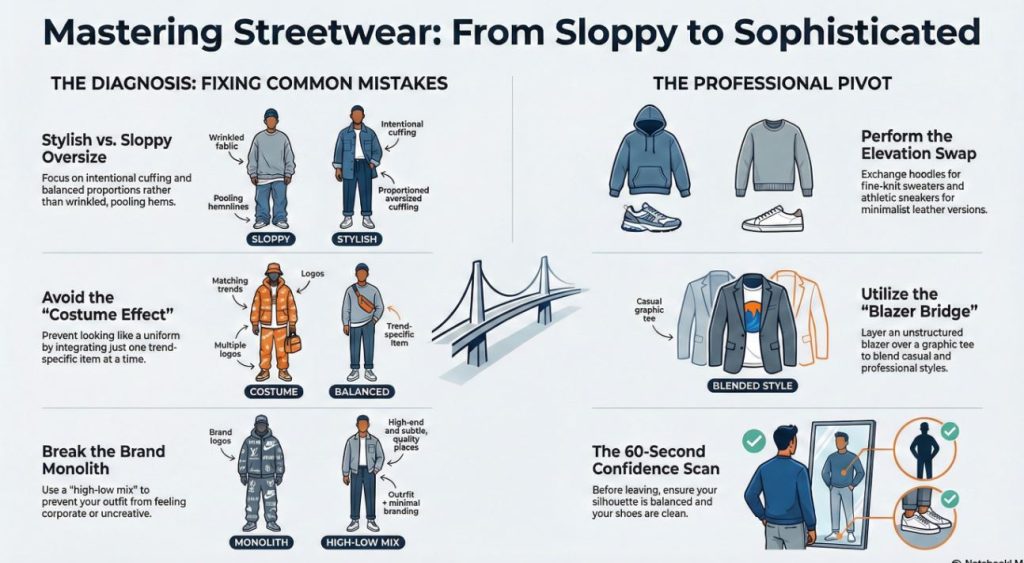
- The Sloppy vs. Stylish Oversize: The line is in the details. Sloppy means wrinkled, pooling hems, and no shape. Stylish means clean garments, intentional cuffing/tucking, and balanced proportion. Fix: Always alter or cuff pants to the correct length. Use the front tuck. Choose one intentional oversized element, not three.
- The Costume Effect: This happens when you wear too many trend-specific items at once (e.g., full techwear with all the straps, head-to-toe vintage 90s sportswear). It looks like a uniform, not a personal style. Fix: Integrate one trend piece into your existing wardrobe. Pair techwear cargos with a simple hoodie and basic sneakers.
- The Brand Monolith: Wearing only one brand from head to toe (even if it’s a cool brand) removes creativity and can feel corporate. Fix: Use the high-low mix. Break up that full Nike fit with a non-branded jacket or a pair of non-Nike pants.
- Ignoring Grooming & Footwear Care: The most expensive outfit is undermined by dirty, scuffed shoes and unkempt presentation. Streetwear is relaxed, not neglected. Fix: Keep your sneakers clean. A simple skincare and grooming routine completes the look.
Your Pre-Exit Checklist: The 60-Second Confidence Scan
Before you walk out the door, run through this quick mental list:
- [ ] Proportion Check: Is my silhouette balanced (fitted + oversized)?
- [ ] Layer Logic: Do my layers create textural or color interest? Can I remove one if I get too hot?
- [ ] Focal Point: Is there one clear hero piece, or are my items fighting for attention?
- [ ] Accessory Audit: Do my accessories complement or clutter? Are my shoes clean and appropriate for the day’s activities?
- [ ] Context & Comfort: Does this outfit fit my climate, my schedule, and my personal comfort zone? Does it feel authentically me?
Navigating Nuance: When Streetwear Meets the Real (U.S.) World
Streetwear’s flexibility is its strength, but real life has boundaries.
The Professional Environment: In many creative, tech, or progressive U.S. offices, streetwear-adjacent style is acceptable. The key is elevation and editing.
- Swap: A hoodie for a fine-knit merino wool sweater. Sweatpants for tailored, non-denim twill pants. Athletic sneakers for minimalist leather sneakers or clean, monochromatic trainers.
- The Blazer Bridge: An unstructured cotton or wool blazer over a graphic tee and dark jeans instantly bridges casual and professional.
The “When to Stop” Safety Valve: There are times when full streetwear is not the right tool. For a formal wedding, courtroom appearance, or conservative corporate interview, respect the dress code. You can still express your style subtly—through a unique tie, socks, or the cut of your suit—but the primary goal should be appropriateness.
Sustainability & Consciousness: The fast-fashion cycle is antithetical to streetwear’s original ethos of longevity and authenticity. We recommend investing in fewer, better pieces. Explore U.S.-based brands focusing on sustainable practices, buy vintage (a fantastic source for unique graphic tees and jackets), and care for your garments to extend their life.
How to Style Streetwear Questions (FAQs)
Function is your guide. If you can’t move your arms comfortably or are overheating indoors, then you’ve gone too far. In practice, three layers is a sweet spot for most cooler-weather looks. In summer, layering might just be a tee and an unbuttoned shirt.
Use “one statement” principle. If your pants are a bold color (like cargo green or burgundy), keep your top neutral. If you have a loud, graphic tee, pair it with solid, subdued pants and jacket. Let one element be the star.
Start with your footwear. Buy one pair of classic, clean sneakers in white or black. Then, build a single outfit around them using the proportion rule: fitted jeans + slightly oversized tee + your new sneakers. Master that formula first.
Sneakers: Use a protective spray upon purchase. Clean with a gentle brush, soap, and water. For leather, condition occasionally.
Hoodies/ Sweatshirts: Wash inside-out in cold water to preserve graphics and colors. Air dry or tumble dry low to prevent shrinking and maintain fabric softness.
Denim: Wash infrequently in cold water. Air dry to preserve fit and color.
Some More FAQs
Absolutely not. Style has no age limit. The principles simply adapt. A 45-year-old might choose a perfectly fitted Engineered Garments jacket over a James Perse tee and selvedge denim with Common Projects sneakers—that’s sophisticated, grown-up streetwear. It’s about attitude, not age.
Look beyond fashion. Pull inspiration from your other interests. Are you into music, architecture, hiking, or art? Let those influences guide your choices—a color palette from a favorite album cover, the utility of hiking gear, the clean lines of modernist design. Your style should be a reflection of your whole self, not just a copy of an influencer’s grid.
Conclusion: Building a Style, Not Just an Outfit
Mastering how to style streetwear is a journey in self-expression through a defined lens. It begins with understanding the foundational rules of proportion and layer, and then confidently learning where you can bend them. It requires looking at your climate, your daily life in the U.S., and your personal comfort as key design constraints. Remember, the most respected figures in any style scene are those who look consistent and authentic, not those who chase every passing trend. Start with one principle. Refine your fit. Experiment with one high-low mix. Invest in the piece that truly speaks to you. Over time, these deliberate choices coalesce into a personal style that is both unmistakably streetwear and uniquely yours—confident, considered, and effortless in the very best way.
Disclaimer: This content is for informational and stylistic guidance purposes only. Fashion is subjective and personal; all advice should be adapted to your individual comfort, context, budget, and preferences. All brand references are for illustrative purposes and not endorsements.