
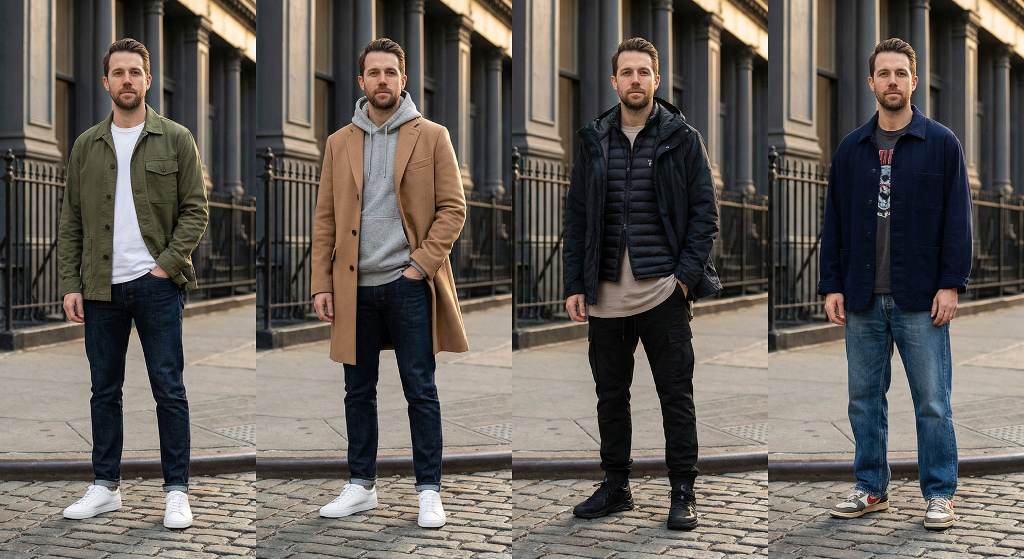
You love your streetwear collection—the limited-edition drops, the perfect vintage finds, the graphic tees that feel like you. But opening your closet feels like just another pile of mess ? Your wardrobe is filled packed racks yet feel you have “nothing to wear,” you my friend are experiencing wardrobe burnout. The culprit isn’t a lack of options; it’s the overwhelming noise of out-of-season pieces clouding your daily choices.
The standard “organize your wardrobe” advice fails short for us Urban Stylist because it doesn’t account for emotional value that we build over time for out pieces, or the practical need to store bulky hoodies and delicate sneakers properly. This guide provides a sustainable, step-by-step rotation system. It’s not about owning less, but about seeing more of what you love, seasonally, so you can enjoy your style without the fatigue.
How to Rotate Seasonal Streetwear: The Core System to Avoid Burnout
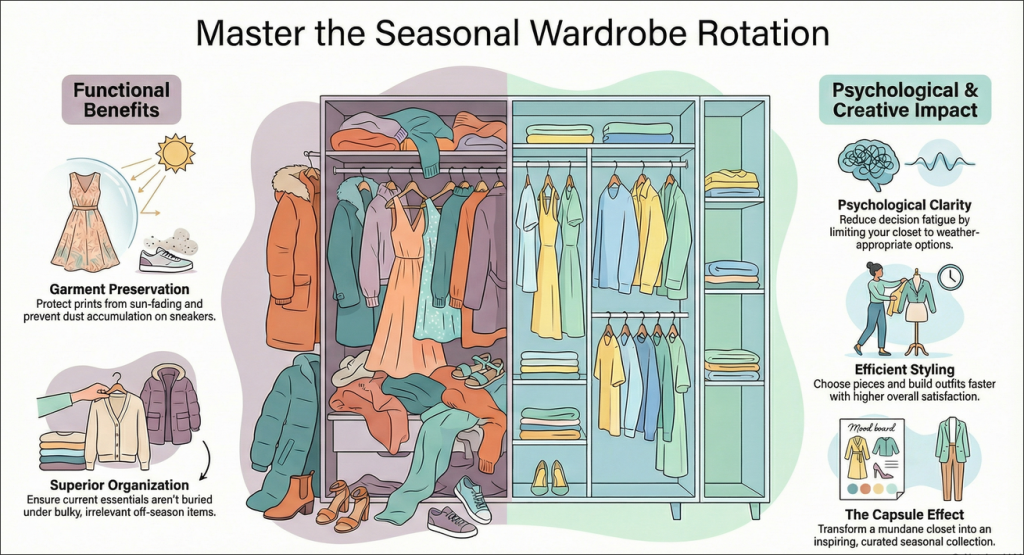
At its core, seasonal wardrobe rotation is just managing your closet mess. It’s the practice of physically storing off-season items to make space in closet this also free up space in your mind providing you less options for your current season’s lineup. In Streetstyle this is really critical for preservation (preventing sun-fading on prints, dust on sneakers), organization (so your summer shorts aren’t buried under winter cargos), and psychological clarity.
When you only see clothes that are appropriate for the weather and your current style mood, you choose pieces, make outfits faster and with more satisfaction. It transforms your daily mundane closet to an inspiring seasonal capsule.
How to Rotate Your Wardrobe: The 5-Step Streetwear Seasonal Swap
The best time to execute your seasonal streetwear rotation is during the shoulder seasons—like late spring or early fall. This timing allows you to refresh your routine just as the weather begins to shift.
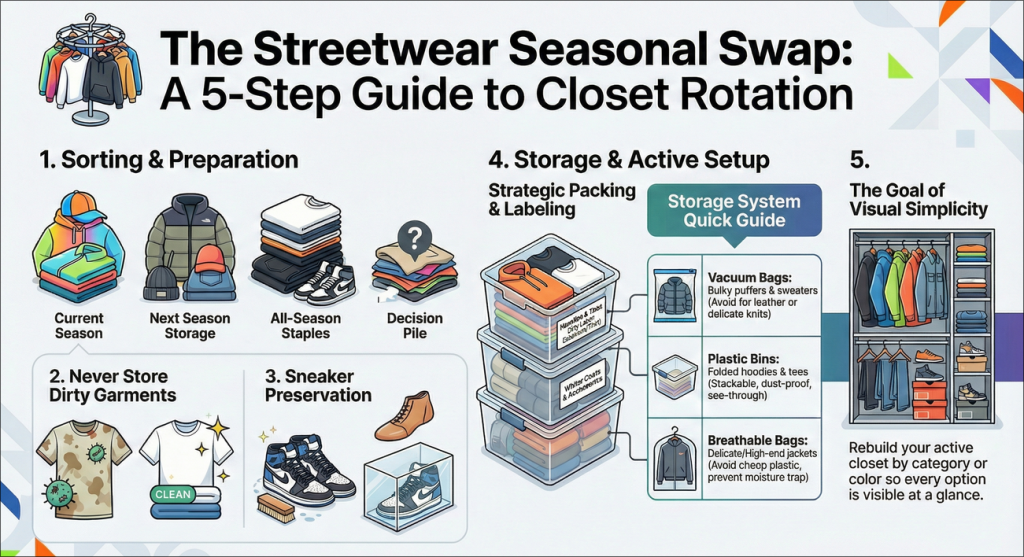
Step 1: Execute a Strategic Edit (Not a Purge)
Pull everything out. As you handle each item, sort it into four decisive piles:
- Current Season (Core): Items you’ll wear in the next 3-4 months.
- Next Season (Storage): The opposite season’s items in good condition.
- All-Season (Baseline): Year-round staples (e.g., certain jeans, basic tees, some sneakers). These stay in the closet.
- Decision Pile: Worn-out items for repair, ill-fitting pieces, or things you simply didn’t reach for this past season. Be honest here.
Step 2: Clean & Prep Every Item for Storage
Never store clothes dirty. Food stains or skin oils can attract pests and cause permanent discoloration.
- Wash or dry-clean everything according to label instructions.
- For prized sneakers, clean them thoroughly and insert shoe trees to maintain their shape.
Step 3: Select Your Storage System
Choosing the right storage is crucial to protect your pieces and avoid wardrobe burnout from damaged items.
- Vacuum-Sealed Bags: Best for bulky sweaters and puffer jackets in small spaces. Caution: Not for delicate knits or leather.
- Clear Plastic Bins: The gold standard. They are stackable, dust-proof, and see-through.
- Breathable Garment Bags: Essential for delicate dresses or high-end jackets you want to hang.
- Sneaker Storage: Use original boxes or clear drop-front boxes with silica gel packets inside.
Step 4: Pack with Logic and Label Everything
Pack items you’ll need last at the bottom (e.g., heavy winter coats in a summer bin). Label every container clearly—for example, “Winter Hoodies & Sweats.” A digital list in your notes app is a game-changer.
Step 5: Rebuild a Functional and Inspiring Closet
Finally, hang and fold your Current Season and All-Season items. Organize by category or color with the goal of visual simplicity. You should be able to see every option at a glance, completing your seasonal rotation.
Avoid These Pitfalls When You Rotate Seasonal Streetwear
- Storing in Cardboard Boxes: They attract moisture and pests. Invest in plastic.
- Using Wire Hangers: They can misshape the shoulders of your tees and jackets. Use padded or felt hangers.
- Forgetting About Your Closet: Store bins under the bed, on a high shelf, or in a closet corner. Out of sight, but not forgotten.
- Ignoring Climate: In humid Southern states, moisture is the enemy. Silica gel packets are non-negotiable. In dry, dusty Southwest areas, dust-proof seals are key.
Your Checklist to Rotate Seasonal Streetwear Without the Stress
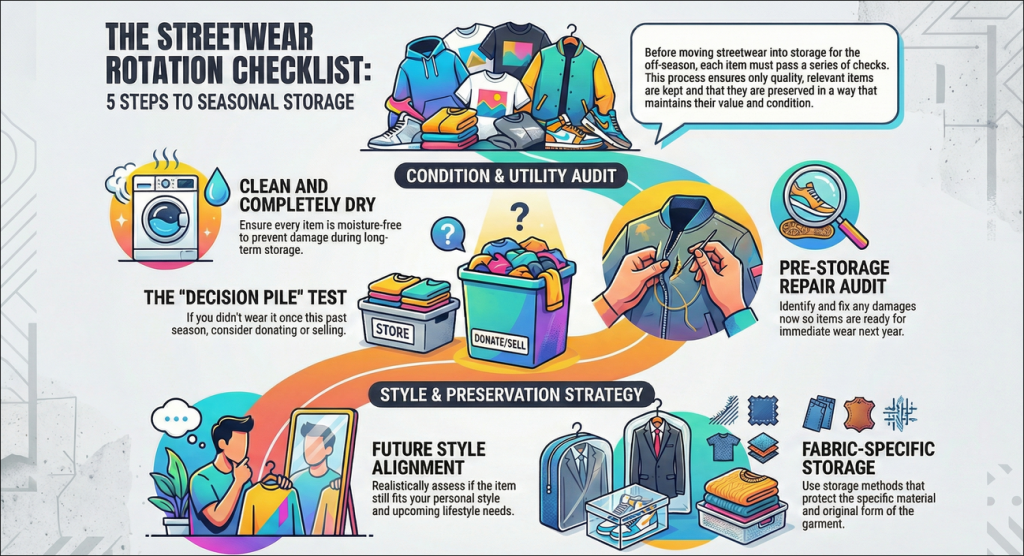
Before an item goes into storage, ask:
- ✅ Is it clean and completely dry?
- ✅ Did I wear it at least once this past season? (If no, consider the Decision Pile)
- ✅ Is it in good repair, or does it need fixing before next year?
- ✅ Does it realistically fit my style and life for the upcoming year?
- ✅ Is it stored in a way that protects its specific fabric and form?
Nuances for the US Streetwear Enthusiast
- Small-Space Solutions (NYC, SF, Chicago Apartments): Utilize vertical space with high-quality shelf risers and under-bed storage bins. Vacuum bags can be a necessity for winter bulk.
- Variable Climates: If you live in a place with unpredictable “shoulder seasons” (like the Pacific Northwest or Midwest), keep a small, accessible “transition bin” with light layers and rain gear, so you’re not constantly digging into deep storage.
- The Emotional Piece: You have a graphic tee from a 2017 concert that no longer fits but holds memory. It’s okay to keep it. Designate a small, specific memory box for a few of these items—separate from your main rotation system. This honors the sentimental value without clogging your daily workflow.
When to Stop: If the process feels overwhelmingly emotional or you find yourself unable to part with anything, even damaged items, it might be a sign to pause. The goal is to reduce stress, not create it. Consider enlisting a pragmatic friend for a second opinion or break the task into smaller sessions over a weekend.
Frequently Asked Questions (FAQ)
Aim for two full rotations yearly: Spring/Summer and Fall/Winter. Make minor tweaks as weather transitions.
Yes you absolutely can and in fact rotation is more critical for small spaces.It forces you to be intentional with the limited space that you have for current-season items.
Related, but different. A capsule wardrobe is a minimal collection. Rotation is the system to manage any collection across seasons. You can rotate without having a capsule.
Use separate colored bins or labels. Divide the hanging space seasonally. Communication is key—schedule a rotation weekend together.
Storage containers. Flimsy bins that crack or lids that don’t seal will ruin your system and potentially damage your clothes. It’s a worthwhile upfront investment.
Conclusion
Rotating your seasonal streetwear isn’t just about staying organized — it is more about refreshing your fashion game. Instead of letting your closet feel like a storage unit for past seasons, you keep it aligned with who you are right now and make truly unique to you. Start small — maybe with your hoodies or tees — and let the habit grow. When a crisp fall morning or a blazing summer afternoon hits, your future self will be glad you did.
Disclaimer: This article is for informational purposes only. All storage and cleaning advice should be balanced with the care instructions from the manufacturer of your individual garments and accessories. Product recommendations are based on general utility and are not sponsored endorsements.