
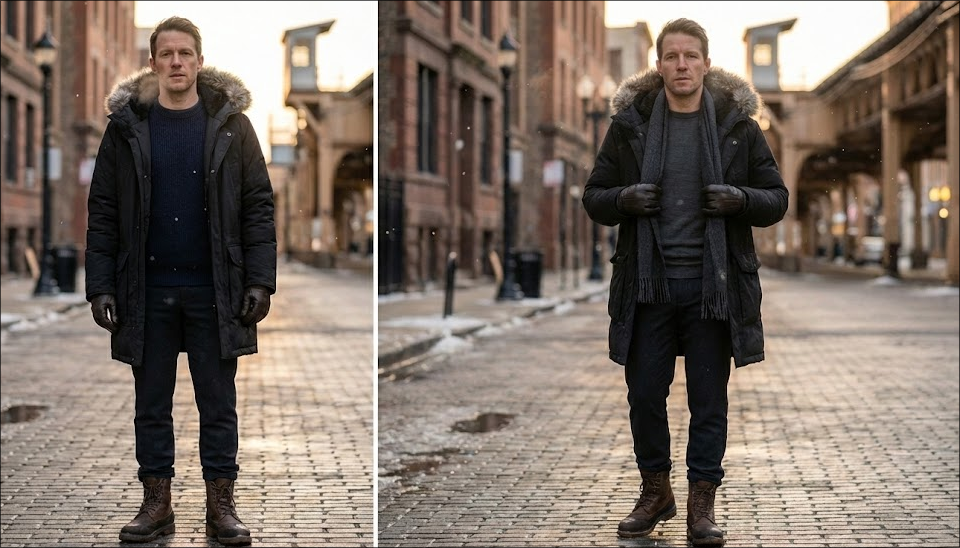
If you are getting ready for a Chicago winter you’ve probably seen lists telling you to grab your “warmest coat” and some “good boots.” That advice may not be off-base, but it’s woefully inadequate nonetheless. The real challenge of a Chicago winter is that it’s not just cold – it’s a damp, biting cold that gets amplified by the unrelenting gusts of wind off the lake – and then there’s the 30-degree swing between the overheated office & the frozen sidewalk outside.
Ordinary packing lists fall short because they treat winter as a single, monolithic season. What you really need here is a system – and that’s exactly what this guide is going to offer up. Not just a list of what to pack, but a clear explanation of why each item is actually important and how to put it all together in a way that will keep you warm from the Loop all the way out to Lincoln Park.
Why Winter In Chicago Is Not Just Cold:
Before we start packing a single sock ,let’s put the boot in to the enemy – that’s Chicago’s winter for you. It’s a masterclass in how to make you feel thoroughly miserable:
- The Wind: That “Windy City” nickname of Chicago’s is no joke. The lake-effect winds strip heat from your body at an alarming rate – and that’s before you even start to think about the wind chill factor
- The Wet: It’s not even really cold in the dry way you’d expect. Instead you get a never-ending cycle of wet snow, sleet, and freezing rain. And of course there’s always the lovely slush to contend with.
- The Transition: One minute you’re bracing yourself against howling gales outside. The next you’re stepping into a warm haven – like your apartment, a train or shop – only to be blown back out into the cold again.
You’re going to need a wardrobe that’ll keep you one step ahead of all three of those: the wind, moisture and temperature variations. And the good news is you don’t need some magic bullet – just a bit of strategic thinking about your clothing choices combination of fabrics and layers.
The Core System: Mastering the 3-Layer Method
This isn’t a suggestion; it’s the foundational principle. Each layer has a non-negotiable job.
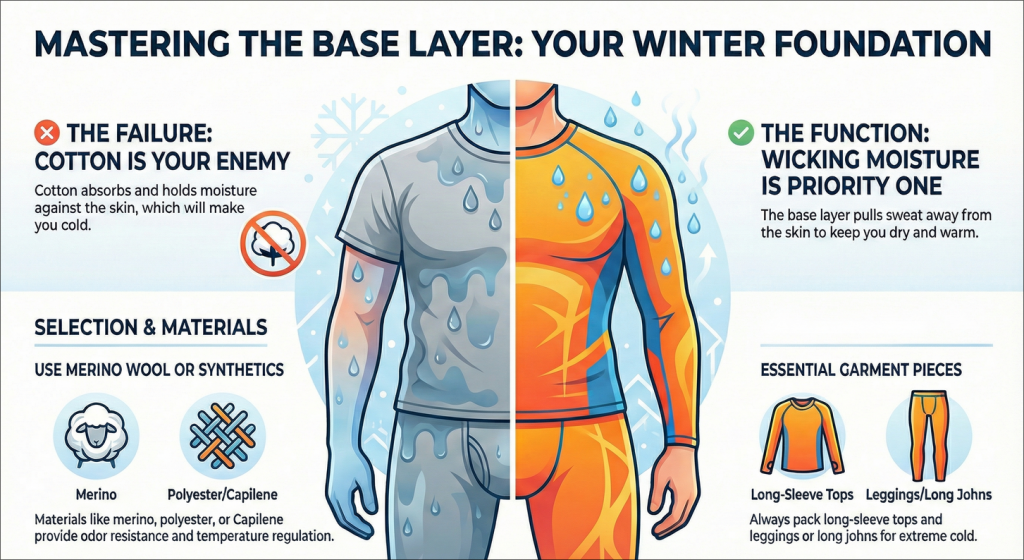
1. Base Layer (Moisture Management):
This layer sits against your skin. Its sole purpose is to wick sweat (yes, you sweat in winter) away to keep you dry. Cotton is your enemy here—it holds moisture and will make you cold.
- What to Bring Along: A good base layer option is merino wool or one of these synthetic fabrics – polyester or Capilene. Merino starts to smell less after a while and it’s quite good at regulating your temperature.
- Some Essentials to Pack: Long-sleeve tops and those long legging type garments – the ones that look like long johns. You might not need to wear the lower half every single day, but stash them away for when the cold really hits.
2. Mid-Layer (Insulation)
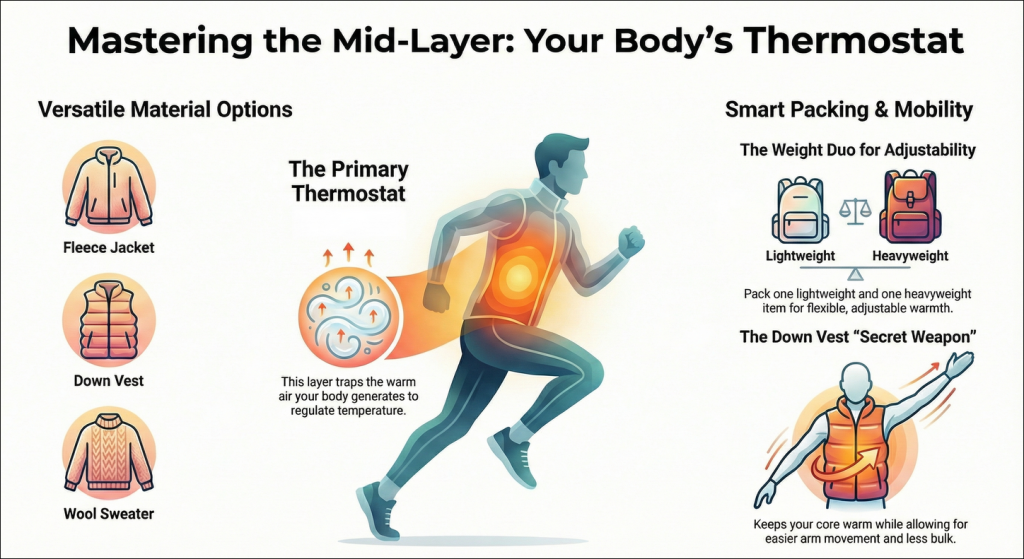
This next layer traps the warmth that your body generates. Think of it like your own built in thermostat.
- What to Pack: you’ll want to bring a fleece jacket along with a down vest or wool sweaters. Try to pack at least one lighter (like a very thin fleece) and one heavier option (think thick wool sweater) so you can adjust the warmth levels to suit your needs.
- One thing to Keep in Mind: down vests are a real game-changer – they keep your core warm without weighing you down under your arms, letting you move around a bit easier.
3. Outer Layer (Protection):
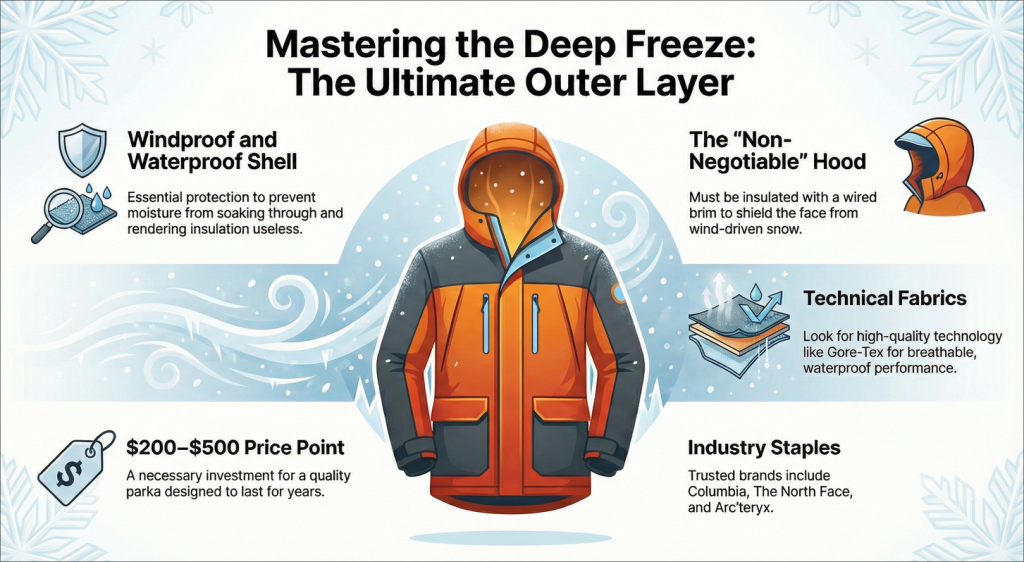
This is your shield. It must be windproof and waterproof (or highly water-resistant). A thick wool coat that soaks through is useless.
- What to Pack: A high-quality, insulated parka with a waterproof shell (look for labels like Gore-Tex or similar technology). The hood is non-negotiable—it should be insulated and have a wired brim to shield your face from wind-driven snow.
- Price Context (US): This is where you invest. Expect $200-$500 for a quality parka that will last for years. Brands like Columbia, The North Face, and Arc’teryx are staples for a reason.
Chicago Winter Essentials
These items are designed to address the most common points why you fail to keep your body warm.
1. Head & Neck
- Beanies & Hats: Wool or fleece ones are a must, especially if you want to keep your ears covered.
- Neck Gaiters or Scarves: A neck gaiter’s a real versatile option – you can pull it up over your face in harsh winds and it doesn’t slip down.
- Earmuffs (The Unsung Hero): If you hate that hat hair that comes with wearing a beanie every day, earmuffs can be a lifesaver for those long commutes.
2. Hands:
- Gloves: Waterproof is a total must, look for ski or snowboarding gloves that will keep your hands dry. And for those times when you want to use your phone on the go, try getting a liner glove to slip inside a waterproof mitten.
- The One Common Mistake: Knit gloves are a bad idea – they soak up water in no time and don’t provide any insulation when they’re wet.
3. Legs
- Your Bottoms Strategy: Jeans are a pretty rubbish choice when it comes to keeping your legs warm, they offer little insulation and just tend to hold in the cold and moisture.
- Better: Corduroy, wool trousers, or insulated technical pants.
- Best (For Extended Outdoor Time): Consider wearing thermal base layer leggings under your regular pants if you know you’ll be outside for a while.
- A Note on Style: If you’re going out for the night, try pairing a thick, opaque pair of tights with a dress or insulated leggings that look like proper dress pants – they’re a great way to stay warm and look good at the same time.
4. Feet(Critical)
Cold, wet feet can completely spoil your whole day.
- Boots: They need to be waterproof, insulated and have some serious grip on the sole. Ankle-high is the minimum, but if you can get away with it, 6-inch boots are the way to go for really deep slush.
- Socks: For goodness sake, avoid cotton at all costs. Pack a few pairs of wool or synthetic hiking socks instead – they’re warm, they cushion, and they still feel okay even if they get a bit damp.
- Pro Tip: Consider keeping a pair of indoor shoes at the office. Swapping out of your heavy boots is a massive comfort-booster.
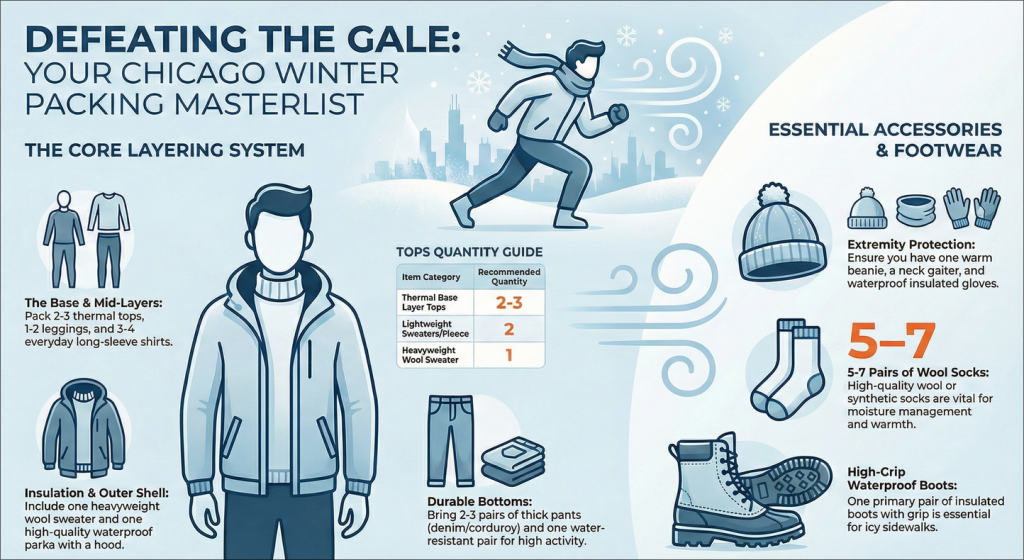
The Complete Chicago Winter Packing List
Use this as your master checklist. Adjust quantities for trip length.
Tops:
- Thermal base layer tops (Merino wool or synthetic) – 2-3
- Lightweight fleece or sweater – 2
- Heavyweight wool sweater or thick fleece – 1
- Insulated, waterproof parka with hood – 1
- Down vest (optional but recommended) – 1
- Everyday long-sleeve shirts (for indoors) – 3-4
Bottoms:
- Thermal base layer leggings – 1-2 pairs
- Everyday pants (wool, corduroy, thick denim) – 2-3 pairs
- Insulated or water-resistant pants (for high-activity days) – 1 pair
Accessories:
- Warm beanie (wool/fleece) – 1
- Neck gaiter or scarf – 1-2
- Waterproof insulated gloves – 1 pair
- Thin liner gloves – 1 pair (optional)
- Wool or synthetic socks – 5-7 pairs
Footwear:
- Waterproof insulated boots with grip – 1 primary pair
- Backup comfortable shoes (for indoor use/if boots fail) – 1 pair
Nuance & Boundaries: When Standard Advice Isn’t Enough
- For the Work Commuter: Your challenge is looking professional while surviving the walk from the L. The solution is a sleek, long parka over your work clothes. Keep dress shoes at your desk. A compactable down vest can add invisible warmth under a blazer.
- The “I Run Cold” Person: Prioritize merino wool for every base layer. Consider adding a second, thin mid-layer (like a silk undershirt). Heated gloves and insoles are a worthwhile investment.
- Safety Valve – When to Stop and Buy More: If you find your outer layer soaking through, your feet are consistently cold, or the wind is cutting through your layers, your gear has failed. Chicago has excellent outdoor retailers (REI, Nordstrom Rack, local shops). Don’t suffer; upgrade the failing component.
- Disclaimer: This guide is for informational purposes based on general winter preparedness principles. For extended outdoor activity in extreme conditions, consult specialized resources and ensure your gear is rated for the temperatures you will face.
FAQ: Your Chicago Winter Outfits
Sure, a thick sweater and leather jacket might do the trick in a still, dry, cold place. But put that combo in Chicago, the wind and dampness will be able to get right through that leather jacket and a sweater on its own just won’t cut it for warmth. Believe me, that’s a recipe for a pretty uncomfortable day out.
Thermal leggings designed for cold weather (made of wool or synthetic wicking material) are excellent. Everyday cotton leggings are not—they won’t provide significant insulation
Okay, when you start shopping for colder weather gear, forget about just picking something that looks cool and focus on the details. Look for the words windproof, waterproof (or at least water-resistant), insulated, wicking (so moisture doesn’t build up), wool, fleece or down.
It can be. A mild winter day is brisk and beautiful. A harsh winter day with lake-effect wind is brutal. Being prepared with the right system is the difference between enjoying the city’s winter charm and miserable survival mode.
Look for a parka rated to at least 0°F to 20°F for comfort. Remember, the rating assumes proper layering underneath.
One excellent, versatile parka is sufficient for 95% of situations. If your budget allows, a shorter, water-resistant jacket for less severe days can be a useful addition.
Conclusion
Conquering a Chicago winter is about respect and preparation. By understanding the specific climate challenges and building your packing list around the layered system—prioritizing windproof, waterproof, and moisture-wicking materials—you transform the experience. You won’t just be bracing against the cold; you’ll be equipped to walk through it comfortably. Pack this way, and you’ll find that the city’s winter beauty, from the quiet of a snow-covered park to the warmth of a neighborhood pub, is well worth experiencing.
Disclamer: This article is for informational purposes only. Always check local weather forecasts and use your best judgment when facing extreme winter conditions. Product recommendations are based on general US market availability and functional attributes.