
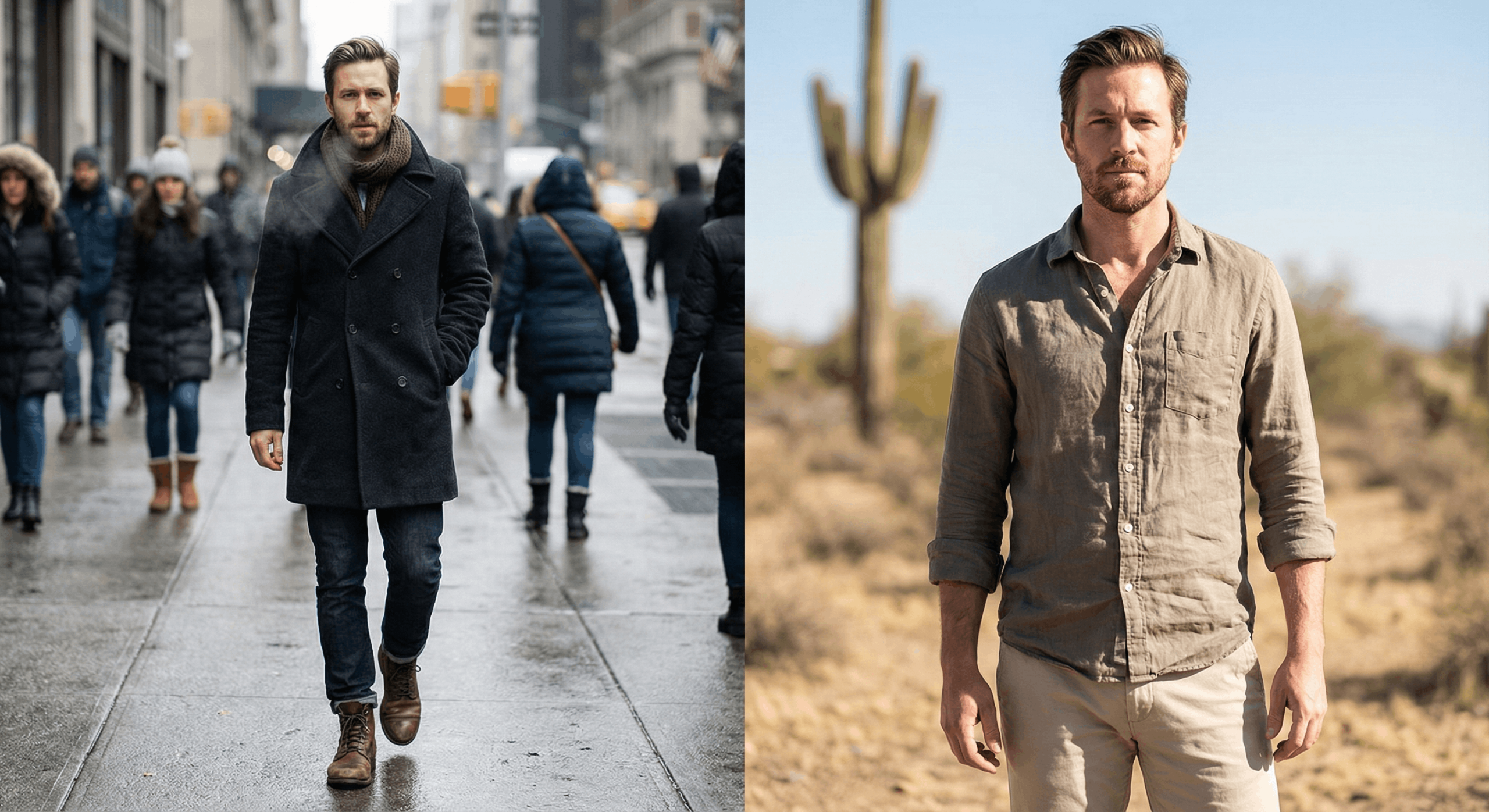
I moved from California to New York without thinking about climate. I just looked at temperatures.
Sixty degrees in California means a light jacket if you feel like it. Sixty degrees in New York in November is freezing. The wind cuts through you. The humidity sits in your bones. The sun hides behind buildings.
That experience taught me something important. Understanding how climate shapes wardrobe choices across US regions is not just about style. It is about basic comfort. The same number on the thermometer feels completely different depending on where you stand.
The United States is massive. The climate in Houston is closer to a rainforest than it is to Phoenix. Both are in the south. Both feel nothing alike. This guide breaks down exactly how climate shapes wardrobe choices across US regions so you can pack smart and dress right.
Why 70 Degrees Feels Different Everywhere
Your body does not care what the thermometer says. It cares about three things. These factors explain how climate shapes wardrobe choices across US regions better than any temperature reading.
Humidity is the biggest factor.
- In Arizona, 100 degrees feels hot but bearable. Your sweat evaporates. It cools you down. Find shade and you feel relief.
- In Georgia, 90 degrees feels like wearing a wet blanket. Sweat sits on your skin and does nothing. The air itself is heavy.
Wind matters just as much.
- Chicago in January at 20 degrees with no wind is a cold day.
- Chicago in January with lake effect wind is dangerous. The wind strips heat away so fast that your coat stops working unless it blocks wind completely.
Sun exposure changes everything.
- In Denver, the sun is intense. It burns through clouds. It finds you at high altitude.
- In Seattle, the sun is soft. It filters through marine layer. It barely touches your skin.
Same temperature. Completely different experience. This is why you need to understand how climate shapes wardrobe choices across US regions before you pack.
How Climate Shapes Wardrobe Choices in the Northeast and Midwest
If you live in Boston, New York, Chicago, or Minneapolis, winter is a fight. The cold finds every gap. The wind cuts through normal jackets. Then you go inside, and it is 72 degrees with heat blasting from every vent.
People who dress well here understand the coat system. You wear what you want inside. A sweater. A long-sleeve shirt. Maybe just a t-shirt. Then you wear a coat that handles the outside. The coat is your shield. You take it off when you arrive.
What actually works:
- A coat that hits below your hips. Cold air creeps up under short jackets.
- A scarf that seals the gap at your neck. This is not fashion. It is function.
- Boots with actual tread. Sidewalks get icy. You will fall without grip.
- Wool sweaters instead of acrylic. Wool breathes. It keeps you warm without trapping sweat.
- A thin merino layer under your coat. This works better than one giant thick sweater.
What fails:
- Wearing one massively thick sweater and no coat. You sweat on the train. You freeze on the walk. Separate your indoor clothes from your outdoor shell.
- Cotton as your base layer in winter. Cotton holds moisture. If you sweat, you stay cold.
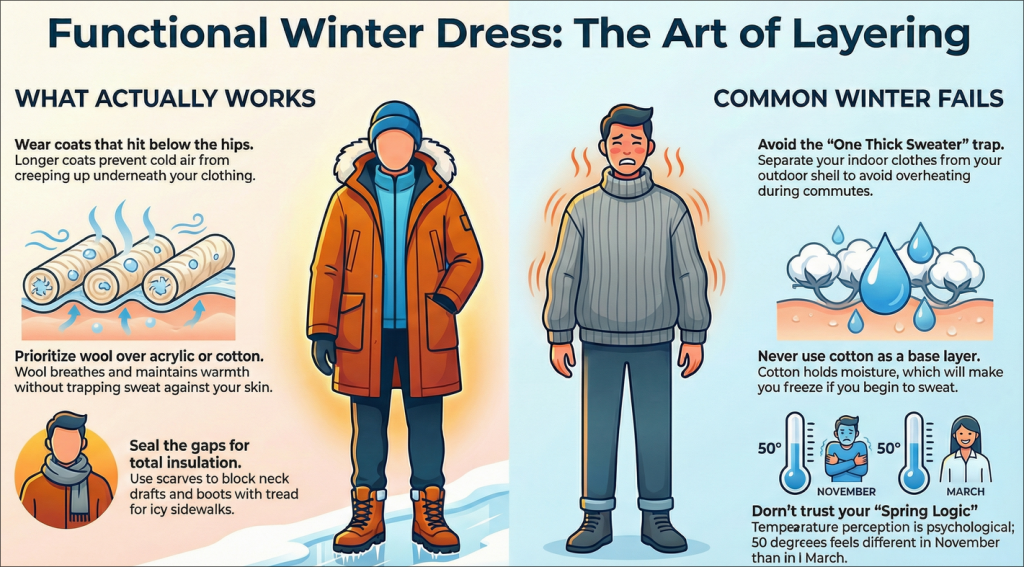
Spring and fall are tricky here. Fifty degrees in November feels freezing because you just came from summer. Fifty degrees in March feels warm because you survived January. You will see people in shorts when it hits 45 in April. That is relief. Not logic.
How Climate Shapes Wardrobe Choices in the Southeast and Gulf Coast
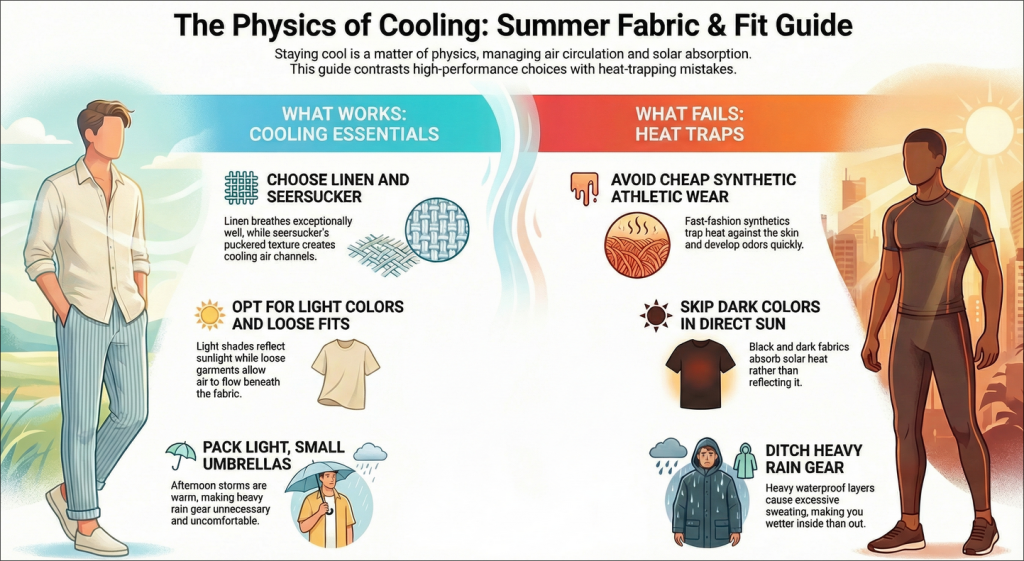
Drive south to Atlanta, New Orleans, or Miami and the rules change. The goal is not warmth. The goal is moving air across your skin. This region shows how climate shapes wardrobe choices across US regions in the opposite way.
I spent a summer in Savannah wearing fitted t-shirts. Big mistake. Within ten minutes they were soaked. They clung to me like plastic wrap. It felt like wearing a trash bag.
Locals wear loose clothes. Not because they ignore fit. Loose clothes let air circulate. When air moves between fabric and skin, it cools you down. Tight clothes trap heat and moisture against you.
What actually works:
- Linen breathes better than anything. It wrinkles instantly but that is the point. Those wrinkles mean air gets through.
- Seersucker keeps fabric off your skin. The puckered texture creates tiny air channels.
- Light colors reflect sun instead of absorbing it. You see white and pastel in the South for a reason.
- Loose fits that hang away from your body. Air flows underneath.
- Small umbrellas or packable rain jackets. Afternoon storms roll in fast. The rain is warm so you do not need heavy gear.
What fails:
- Cheap athletic wear from fast fashion brands. Those synthetic shirts trap heat. They smell terrible after an hour. You want breathable natural fibers.
- Dark colors in direct sun. Black absorbs heat. White reflects it. Simple physics.
- Heavy rain gear. It makes you sweat so much you end up wetter inside than out.
The Southwest and Desert: Cover Up to Cool Down
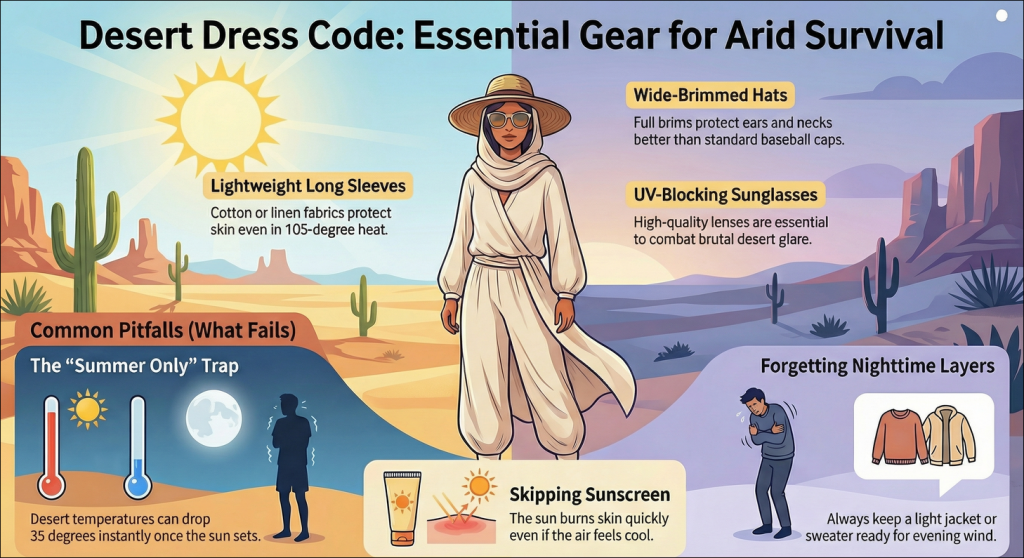
Phoenix, Las Vegas, parts of California. People see desert and think tank tops and shorts. Then they get burned and wonder what happened. If you want to understand how climate shapes wardrobe choices across US regions, the desert is the clearest example.
Desert cultures around the world wear long loose robes for a reason. When the sun is that intense, exposing skin is the worst thing you can do. Fabric creates shade. It blocks radiation.
What actually works:
- Lightweight cotton or linen that covers your arms and legs.
- Long sleeves in summer. Someone wearing this at 105 degrees looks crazy but is actually smart.
- A hat with a brim. Baseball caps leave your ears and neck exposed.
- Sunglasses that block UV. The glare here is brutal.
- A light jacket or sweater in your car. Deserts get cold at night. That 105 degree day can drop to 70 after sunset.
What fails:
- Only packing summer clothes. You will shiver at dinner when the wind picks up.
- Thinking you cannot wear sleeves in heat. You actually need them.
- Forgetting sunscreen. The sun burns fast here even if it does not feel hot.
How Climate Shapes Wardrobe Choices on the West Coast
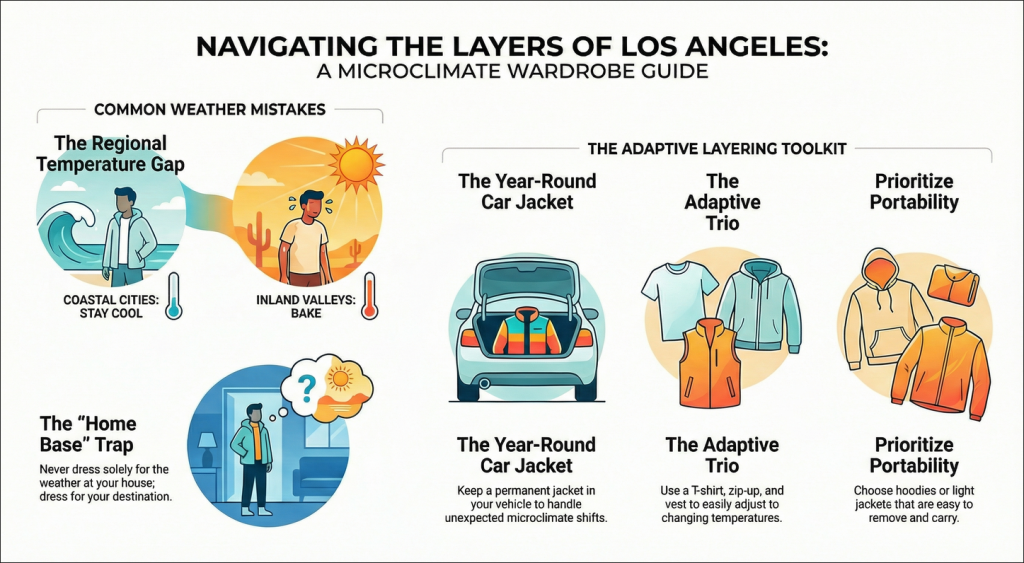
California and the Pacific coast have perfect weather. Sort of. It does not get extremely hot or cold very often. But it has marine layer. Fog. Wind off the ocean. This mild but variable climate shapes wardrobe choices in unique ways.
San Francisco is the classic example. You can stand in the Mission district. Sun shining. Warm. Drive fifteen minutes to the beach and you freeze. Fog rolls in. Wind cuts through you. The temperature varies by neighborhood and time of day.
What actually works:
- The hoodie. It was invented for this climate.
- A light jacket you can take off and tie around your waist.
- Layers that are easy to remove and carry.
- A t-shirt, a zip-up, and maybe a vest. Things that adapt.
- A jacket in your car year-round. Always.
What fails:
- Dressing for the weather at your house. You need to dress for everywhere you might go today.
- Assuming coastal and inland are the same. In LA, beach cities stay cool. Inland valleys bake. You drive through climate zones.
The Mountain West: Weather Does Whatever It Wants
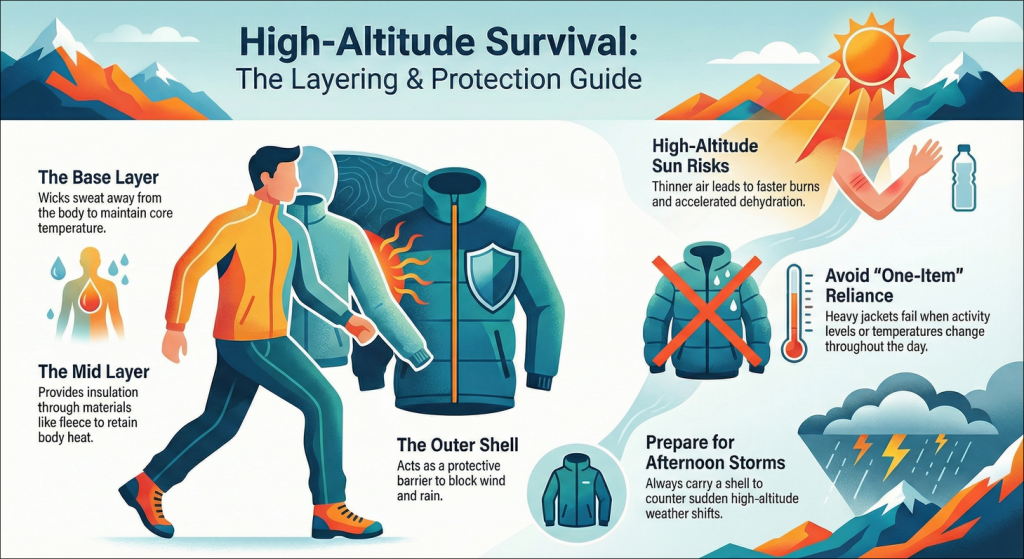
Denver, Salt Lake City, Boise. High altitude. Intense sun. Weather that changes hourly. It can snow in the morning and be sunny and warm by noon. This unpredictability shows how climate shapes wardrobe choices across US regions in extreme ways.
People here dress for utility first. You see outdoor gear as everyday wear because it works.
What actually works:
- The three piece system. Base layer that wicks sweat. Mid layer that insulates like fleece. Outer shell that blocks wind and rain.
- Boots that handle trail or pavement.
- Sun protection at altitude. The sun burns faster here. The air is thinner. You dehydrate quicker.
What fails:
- Relying on one heavy item. A big ski jacket works on the mountain. You cannot wear it hiking or walking around town when the sun comes out.
- Forgetting that afternoon storms happen. Keep a shell with you.
A Simple Checklist for Anywhere
If you are moving or traveling, here is how to think about packing. This checklist sums up how climate shapes wardrobe choices across US regions.
Check humidity first.
- High humidity means loose fits and breathable fabrics.
- Low humidity means you need coverage from the sun.
Pack a transition layer.
- Deserts cool down at night.
- Coasts have fog and wind.
- Mountains change by the hour.
- A light jacket or sweater is not optional.
Watch the sun.
- High altitude sun burns fast.
- Desert sun burns through clouds.
- Hats and coverage are protection. Not style choices.
Separate indoor from outdoor in cold places.
- Wear comfortable clothes inside.
- Wear strong clothes outside.
- Do not combine them into one sweaty mess.
Look at what locals wear.
- If everyone has jackets on at 60 degrees, do not be the person in shorts.
- Locals know something you do not.
Frequently Asked Questions
Linen works best. It breathes and air moves through it. Cotton is okay but stays wet. Avoid cheap polyester unless it is designed for hot weather.
If you run cold, yes. A good down or synthetic puffy coat makes a difference. If you run warm, a wool coat with a liner might be enough. The key is windproofing. Wind cuts through wool.
They stay indoors during peak heat, use cars with good AC. They wear loose covering clothes when outside, carry water constantly. Dehydration hits fast.
Because the rain is usually light and the temperature is mild. At 55 degrees with drizzle, you can wear shorts if your feet stay dry. Waterproof shoes matter more than pants there.
Because people go from work to a hike. Or they just want shoes that work on any surface. It is practical. You never know when you might want to walk a trail.
Conclusion
The best dressed people pay attention to the air. They know the same temperature feels different in Atlanta versus Arizona versus Chicago. They understand how climate shapes wardrobe choices across US regions and they dress accordingly.
So now you understand how climate shapes wardrobe choices across US regions. Next time you pack a bag or buy a coat, think about where you actually are. Is the air wet or dry? Does the wind cut through you? Does the sun feel like it is burning your skin?
Answer those questions and you will dress right. No matter which region you call home.
Disclaimer: This is general advice based on typical regional climates. Weather varies, seasons change, and your personal comfort matters most. Dress for you.