
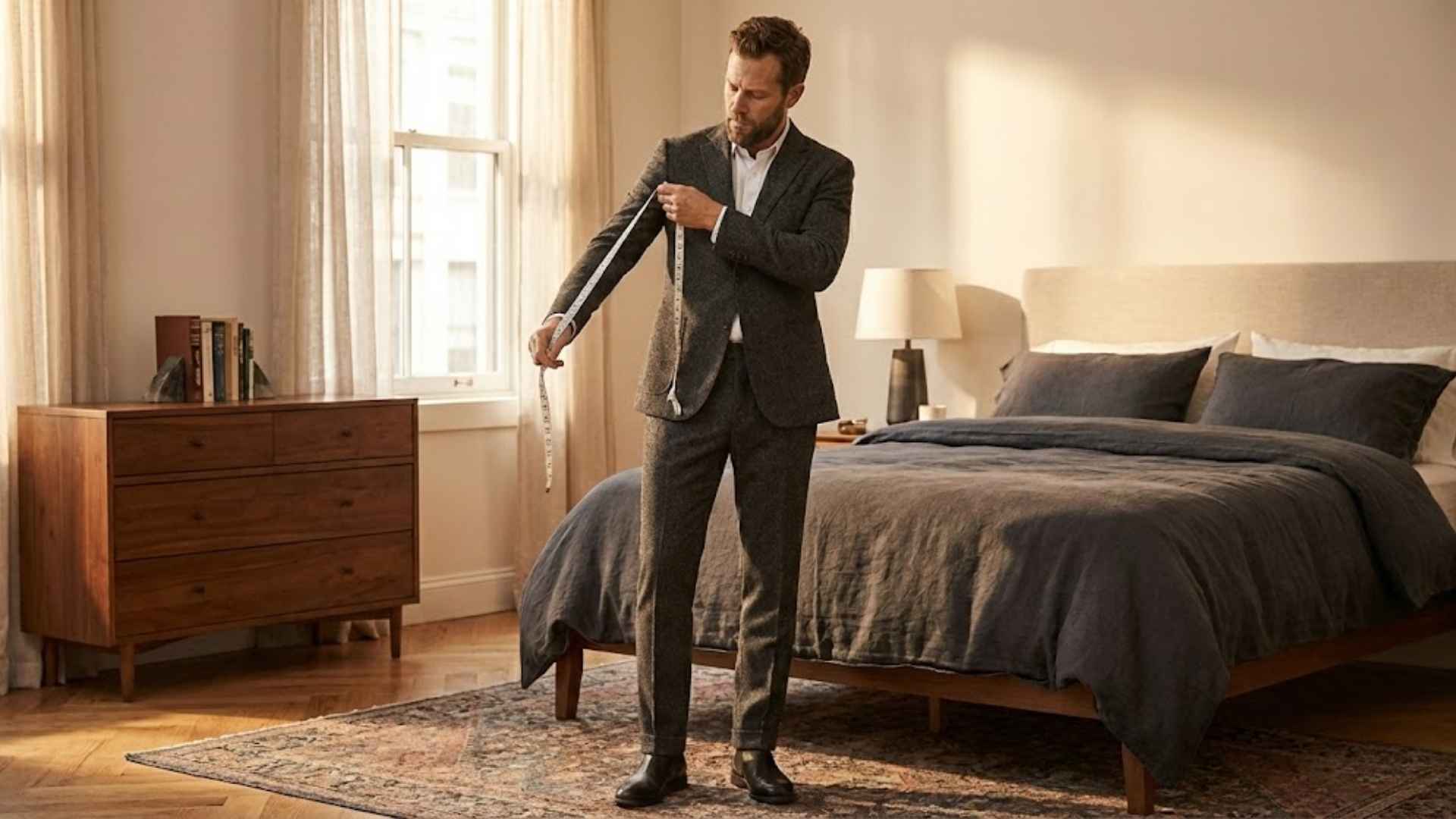
That moment of doubt is universal. You need a new suit. Standard size charts are confusing. They never account for your unique shape. This leads to poor fits. It creates frustration and wasted money. Learning how to measure for a suit solves everything. This guide gives you a tailor’s eye. You will get precise, professional numbers. These numbers guarantee a perfect silhouette. Let’s begin your transformation.
Why Generic Size Charts Fail You
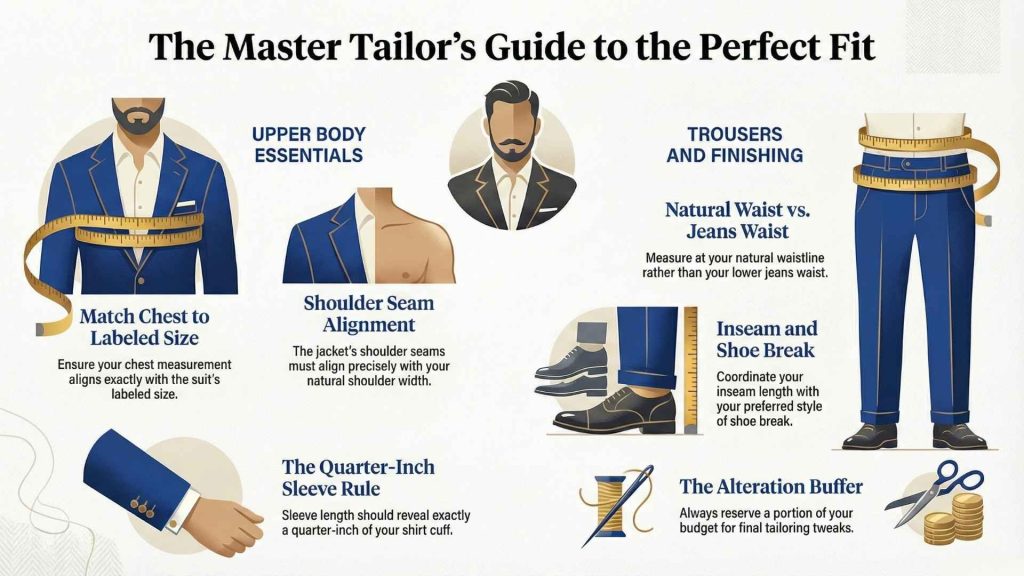
Off-the-rack suits use scaled body models. Your actual body is unique. A label like “40R” is just a starting point. Shoulder width and sleeve length vary wildly. Accurate self-measurement bridges this gap. It provides a personal blueprint. This knowledge empowers your shopping. It makes online orders successful. It streamlines tailor conversations. You take control of your fit.
Your Measurement Toolkit and Mindset
Gather a soft tailor’s measuring tape. A metal hardware tape will not work. Wear thin, fitted base layers. Stand naturally before a mirror. Do not suck in your stomach. Do not puff out your chest. Recruit a friend for best results. Precision requires a helper. Have a notepad ready. Record every number in inches. This is the US standard. Now, let’s learn how to measure for a suit properly.
The Jacket: Three Non-Negotiable Measurements
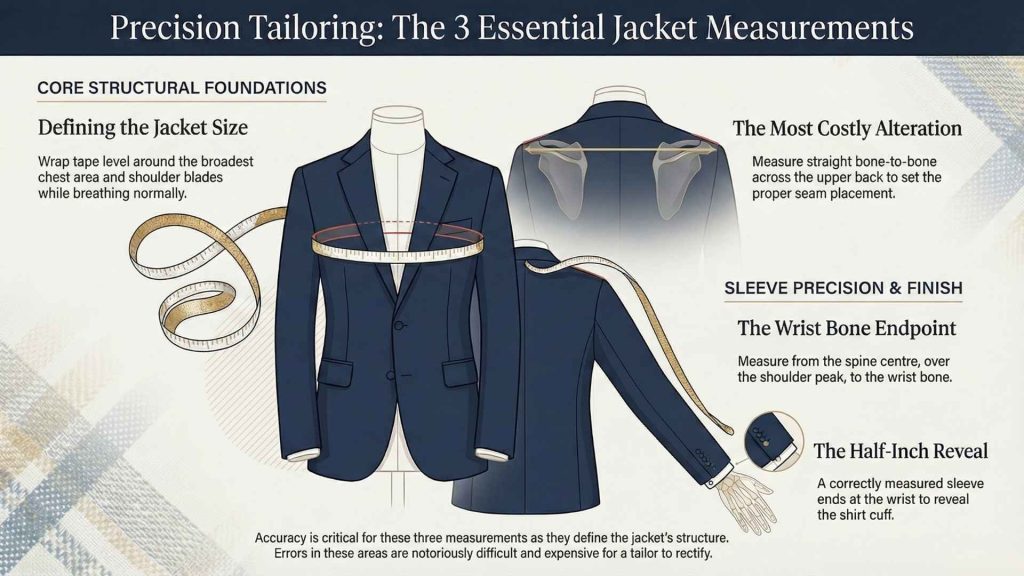
These areas are costly to alter. Accuracy here is critical.
1. Chest (The Most Important Number)
Have your helper wrap the tape. Circle the broadest part of your chest. Include your shoulder blades. Keep the tape perfectly level. Breathe normally during the measurement. The tape should be snug. It must not pinch your skin. This number defines your jacket size.
2. Shoulder Width (The Costly Fix)
Locate the bony tip of your shoulder. Measure from left bone to right bone. Go straight across your upper back. This is not down your arm’s slope. A proper seam sits right here. Tailors hate adjusting shoulders. Getting this right saves money.
3. Sleeve Length (The Finishing Touch)
Bend your arm slightly at the elbow. Start the tape at your spine’s center. Run it over your shoulder’s peak. Continue down to your wrist bone. A proper jacket sleeve ends here. It should reveal a half-inch of shirt cuff.
The Trousers: Focus on Where They Sit
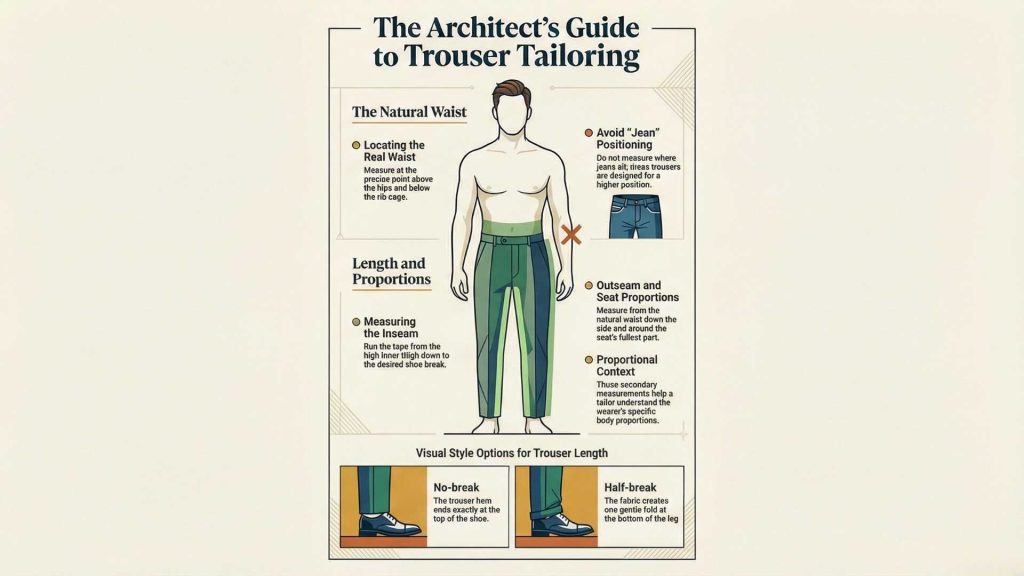
1. Your Real Waist
Find your natural waistline. It sits above your hips. It is below your rib cage. Measure around this precise point. Do not measure where your jeans sit. Dress trousers are designed for this higher position.
2. Inseam (The Style Choice)
This determines your pant’s length. Start high inside your thigh. Run the tape down your inner leg. Stop at your desired shoe break. A “no-break” ends at the shoe top. A “half-break” creates one gentle fold.
3. Outseam and Seat
Measure from your natural waist down your side. This is your outseam. Then, measure around your seat’s fullest part. These numbers provide useful context. They help tailors understand your proportions.
Your Professional Measurement Checklist
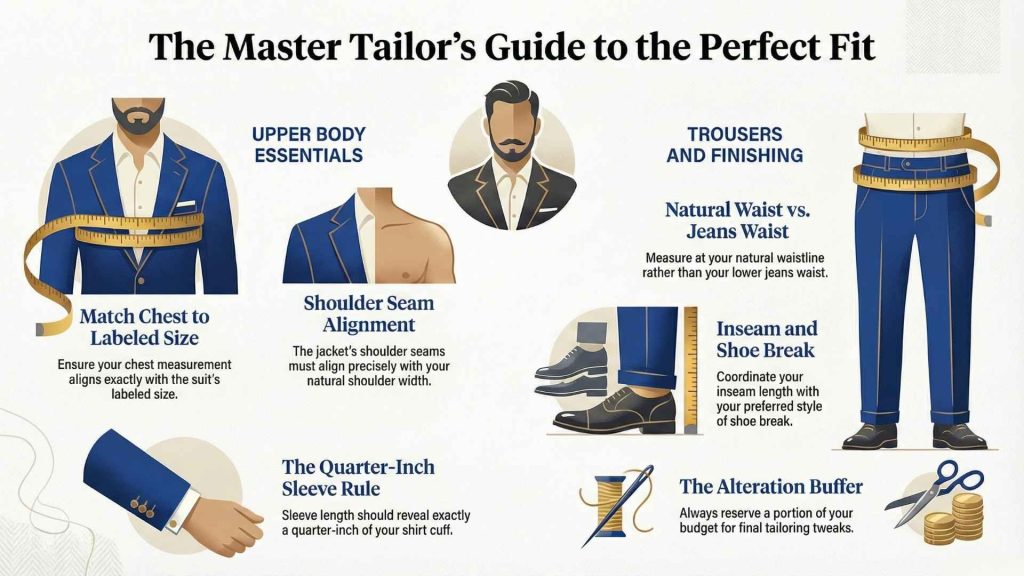
Use this list before buying any suit. It translates numbers into action.
- Chest Measurement matches the suit’s labeled size.
- Shoulder Width aligns with the jacket’s seam placement.
- Sleeve Length allows for a quarter-inch of shirt cuff.
- Trouser Waist uses the natural waist, not the jeans waist.
- Inseam Style matches your preferred shoe break.
- Alteration Budget is reserved for final tweaks.
Best Leather Jacket For Men 2026 Guide | Expert Buyers Advice
Common Mistakes to Avoid Right Now
People often use a stiff tape measure. This will ruin your numbers. Never measure over bulky clothing. It adds useless inches. Do not hold your breath. It distorts your chest size. Never guess your shoulder points. Find the bony knob each time. Avoid pulling the tape too tight. Snug is the operative word.
Nuance and Professional Boundaries
Climate can influence fit choices. Humid southern states favor roomier cuts. Drier northern cities allow for trimmer silhouettes. Know when to call a professional tailor. Major life events demand expert eyes. Unique postures require skilled hands. Invest in a pro for your first bespoke suit. Use your self-measurements as a knowledgeable starting point.
Frequently Asked Questions
Always size up for the jacket. Tailors can take fabric in easily. Letting it out is often impossible.
Sleeve shortening costs $20 to $40. Jacket waist suppression runs $40 to $80. A simple trouser hem is about $20.
You can approximate chest and waist. Shoulders and sleeves need a helper. Accuracy demands a second pair of hands.
Check your core numbers every year. Update them after any major weight change. Keep a current record in your phone.
The Final Word on Fit
Learning how to measure for a suit is a powerful skill. It transforms an anxious task into simple confidence. You now possess a tailor’s logic. Record your numbers carefully. Use them for online shopping. Use them with your local tailor. A perfect fit is always within reach. It starts with your own two hands.
Disclaimer: This guide is for informational purposes. We recommend consulting a professional tailor for critical events. Fit may vary based on brand and cut.